

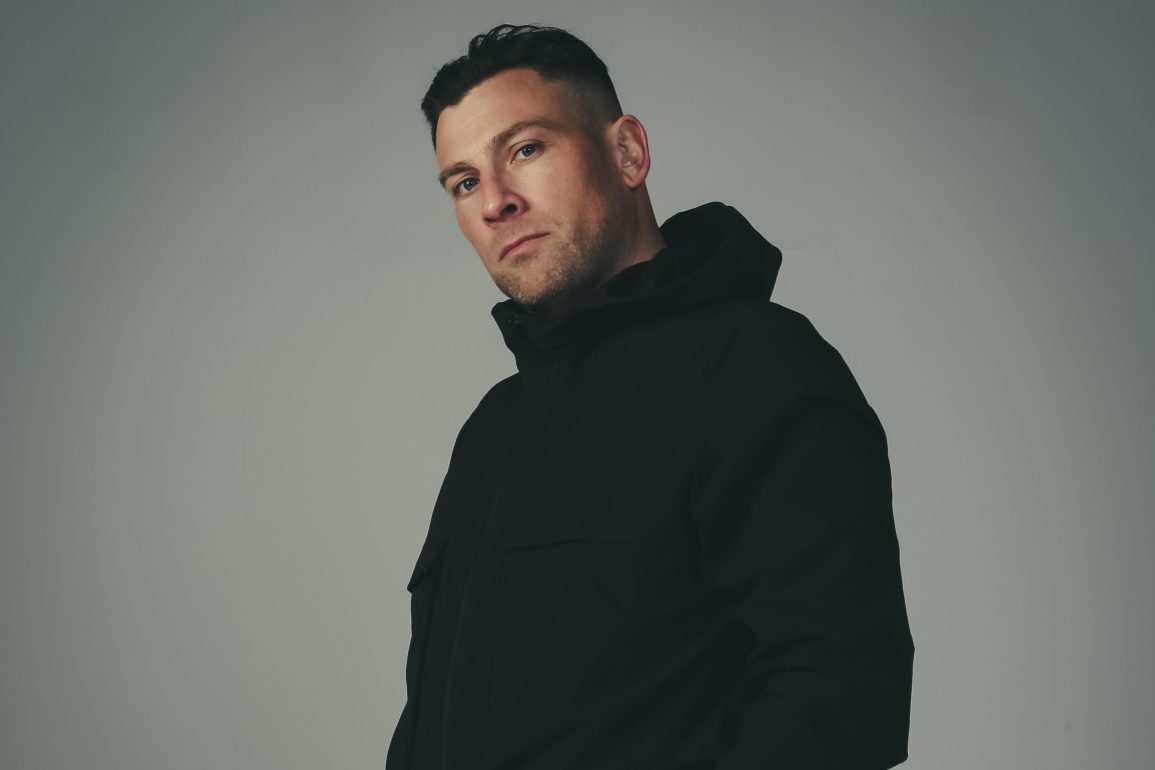
In an industry awash with formulas and fleeting trends, CASH ONLY is carving out something far more enduring – a bold, genre-defying vision that’s rewriting the rules of UK club culture. As the founder of the fast-rising imprint Famous When Dead Records, he has built a full-spectrum creative movement where music, art, and immersive storytelling collide. With a flurry of standout releases, a stacked summer tour schedule including Glastonbury, Hi Ibiza, and Defected Croatia, and high-profile support from the likes of Major League, Mark Knight, and Sam Divine, CASH ONLY is proving that underground doesn’t mean underpowered. We sat down with the DJ, producer, and visionary label boss for an exclusive interview – dive into his world below.
Hello CASH ONLY, thanks for chatting to us!
Famous When Dead pairs strong visual identity with genre-blurring releases. How do the visual and sonic sides inform each other, and which tends to lead?
The focus has been on the music at the start as it’s been a very time-consuming process to get the project off the ground but we have already started exploring the connection to our visual side by linking in music videos and t-shirts to the releases, the next step is to start pushing the visual side as we continue to explore our own musical creativity to find our space in the scene and create a following who buy into what we are trying to do.
Your collaborations span from vocalists to visual artists. What’s something outside of music that’s recently shaped your creative direction?
I feel art and music can also help to make a statement about modern day issues we all face, whether personally or on a global scale. At the moment there is far too much war going on and on a more local scale other issues that people are blowing all out of proportion like immigration and creating hate between communities. I don’t want to get too deep into these things but I do hope that some of our art and visuals can help to raise more awareness about the realities going on in the world and support people to be more cohesive in a way that’s not too serious.
You’ve built a reputation for going against the grain. What’s a recent creative choice that felt like a risk but paid off?
I’m a totally independent artist and while I do have lots of support on the scene. It’s often a battle with no agent or manager to get noticed by the right people or be booked for the right shows. For a while, I was desperate for someone to manage me or represent me for bookings but I recently made a decision to stay independent so that I’m fully in control of what I’m doing. I’m just doing what I love doing and am not doing this to be the next Defected or Toolroom. If people like my music and like what I do as a DJ then great, if not then also no problem. I have to remind myself that although I’ve been doing music for 30 years, I’e only been back at it for the past 2 years and what I’ve already achieved has been mind-blowing in growth as an artist in today’s scene.
You’ve played major festivals and clubs, but is there a type of space or setting you haven’t explored yet that you think your sound belongs in?
I’ll always be an advocate of small dark spaces where you can connect your energy to the dance floor in a more personal way. Plastic People in Shoreditch was probably my favourite venue ever, just a small dark box with an insane sound system, my first Famous When Dead Records Showcase is at Corsica Studios that has a similar kind of vibe, I’m excited for that.
‘Move Slow’ was written in Amsterdam during ADE. How did that environment and process influence the track?
A lot of my recent productions have been down the Afro or Deep melodic tech route and this is probably one of the strongest tracks that I’ve written. The team behind setting up the writing camp were incredible, with some really capable people in the room both in terms of what they added from a songwriting and production point of view. The environment wasn’t as important (and I was suffering with food poisoning so arrived late) but it’s always important to have good people in the room so a special shout to Rob from Artist Tribe for putting that together!
You’ve released on legendary labels like Nervous and DVINE Sounds. What did you learn from working with those platforms that you’ve brought into your own label?
I cut my teeth on running a label with DVINE Sounds, basically being thrown in at the deep end by the Wife (Sam Divine) who just decided to make me label manager one day after I had helped her with some of the label behind the scenes. I was grateful but it obviously was a big challenge. I learnt a lot from the guys at Defected who previously delivered the label and a special shout out to Rosie Can there who was amazing to work with on each campaign.
You’re 17 tracks into your current creative run. How has your approach evolved, and what’s stayed the same?
I make almost all my music in writing camps with a few people in the room, I try and get the best engineers, songwriters and vocalists together and direct the creative process as best as I can towards where I think we want to go with each idea. Although I have a studio at home, it’s difficult to get things to the level I want so I always just book out some rooms in London and assemble a squad. My process to date has been around creating lots of songs that can sound good in the club but also on radio or on Spotify but I think I want to start making more music for DJs now and get more clubby – so watch this space. I’ve also been spending the last 2 years exploring where I want to be with my sound which might be difficult for my fans to keep up with, again I think that sound is getting to a point where I think I know where I want to be.
When you’re curating for Famous When Dead, what makes a track feel like it fits the label, beyond just the quality of the production?
Famous When Dead Records is predominantly a platform for me self releasing my own music but there are a few producers out there that I really love and they send me lots of unsigned music that I want to release. The ultimate acid test is: will I play these songs in my sets, because I play across the board genre isn’t that important, a good tune is a good tune.
With support from names like Mark Knight, Sam Divine, and Paco Osuna, how do you stay grounded in your own creative voice?
I’m grateful for support from all these people and many more, because I know a lot of these people personally. I don’t tend to get super excited just pleased they felt that the music I made was good enough for their sets or radio shows. I get really excited when someone I’ve never met plays my tracks, like when EZ played my track at Ushuaia last year, I was on the stage and heard the kick drum from ‘Salsa House’ coming in and thought OMG he’s playing my track, that was a moment for sure! David Guetta and Major League DJs also played my music recently, these are 2 of the biggest names in music right now, I was blown away by that support.

What role does community play in the label, whether that’s the artists you sign, the visual collaborators, or the listeners?
Without a community you have nothing, they are the driving force behind everything we do at FWDR. When we drop a new t-shirt it’s amazing to see the regulars buying them and to see the fans come to my shows all around the world, I always make time for these people before or after a show and always do my best to communicate with them if they reach out online.
Looking ahead, what’s something you haven’t done with the label yet that you’re working toward — whether musically, visually, or experientially?
When we do our first BIG show at the end of September that will be a real milestone, I haven’t promoted events for 20 years so I’m quite scared to be honest, but I’ve got the right people on board so I think it will be OK.
If someone’s first exposure to CASH ONLY or Famous When Dead is this summer, what do you hope they take away from the experience?
I just hope that they appreciate the music or my style of DJing and have a nice time on the dance floor!
Follow Famous When Dead Records:
Instagram – Beatport – Traxsource
Follow CASH ONLY:
Spotify – Instagram – Website – Linktree