

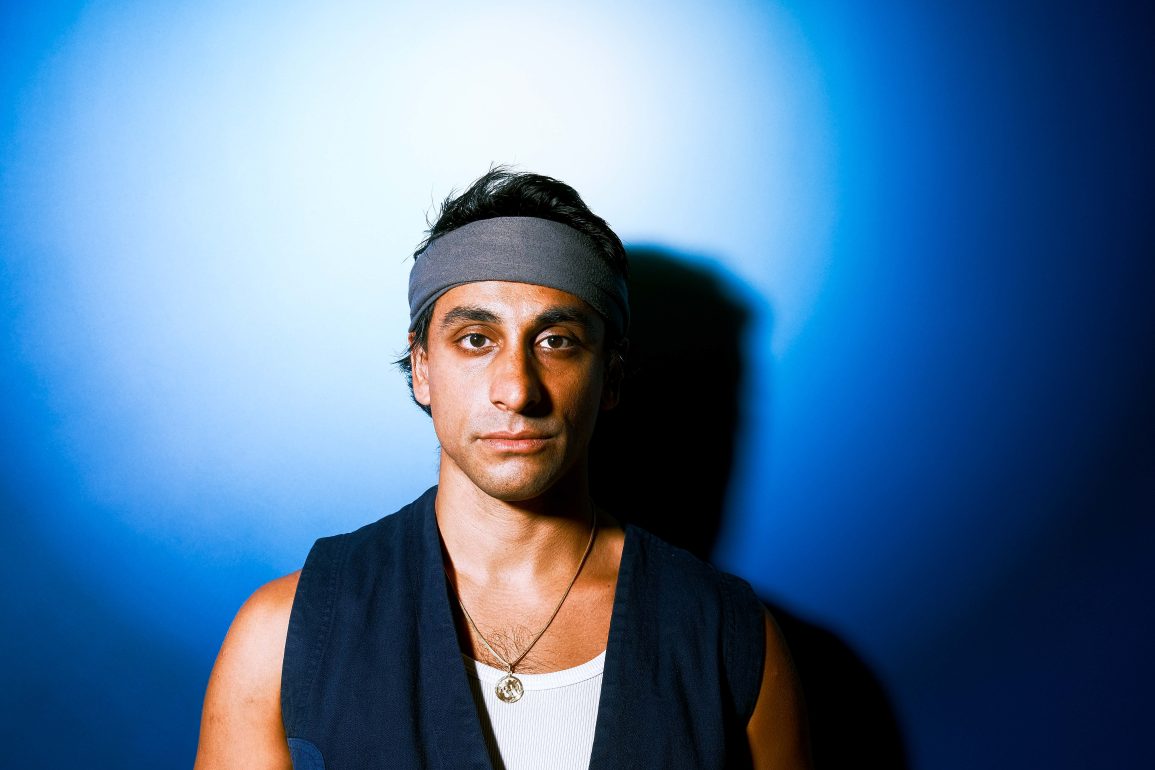
New York-based musician, producer, and meditation practitioner ShiShi has returned with Indigo, a genre-defying 9-track odyssey released on September 5th, 2025. A bold fusion of restless rock and meditative sound design, Indigo harnesses two decades of creative evolution into a sound that feels both ancient and urgent. Known for weaving Indian classical influences into electronic landscapes since his 2017 breakout ‘Aarti’, ShiShi now places guitars alongside tablas, and hypnotic mantras beside searing riffs, crafting an album that transforms spiritual inquiry into sonic fire. Each track, tuned to 432 Hz and rich with symbolism rooted in Hindu philosophy, traces a path from disconnection to awakening. Raised across China, Switzerland, and the U.S., and shaped by a lifelong sense of cultural fluidity, ShiShi embraces his multiplicity as a creative superpower. Following his ambient 2021 project Homecoming, the transformational Chrysalis (2022), and his 2024 spiritual dance collaboration BAHÉ, Indigo marks a return to the raw intensity of rock, filtered through the lens of shadow work, meditation, and sound healing.
Listen to Indigo and read our exclusive interview with Aasheesh Paliwal, the mind behind the music, below.
You’ve lived in so many places growing up—China, Switzerland, the U.S., with deep roots in India. What part of your identity still surprises you the most?
I’m most surprised to find that my identity is not actually tied to any of those places. That’s perpetually amazing and mysterious to me. My sense of self always feels deeper than specific cultures or backgrounds. Experiencing so many different environments has allowed me to put on and take off many masks, only to discover the same “me” beneath it all. It continually leads to the question, who am I, really?
You’ve talked a lot about shadow work and self-discovery. Was there a particular turning point in your life that kicked that journey into gear?
My spiritual journey truly began when I attended my first meditation retreat, a ten-day Vipassana silent meditation. It was the first moment I realized everything unfolds within my own mind, and that I have the power to choose how I respond to life. While this is an idea people know intellectually, experiencing it firsthand through meditation changed everything. Since then, understanding myself more deeply has become the most important pursuit in my life.
Let’s chat about your latest album, Indigo. In past projects like Homecoming and Chrysalis, you explored ambient and electronic sounds. Was returning to rock more like a reinvention or a homecoming for you?
It was both. For me, it was simply the next step in my creative evolution. It’s not a fixed move into rock, but just the latest chapter in making authentic music. Every album I’ve released feels like a more genuine expression of what I’m uniquely here to share.
Every track on Indigo is tuned to 432 Hz, a frequency said to promote healing and balance. Can you speak about your relationship with sound healing and how it informed the album?
Nikola Tesla once said if you want to understand the secrets of the universe, think in terms of frequency, sound and vibration. Music moves us not only emotionally, but also on subconscious, vibrational levels. Discovering that 432 Hz has been researched for its effects on heart–brain coherence inspired me to tune the entire album to this frequency, giving Indigo added spiritual potency.
‘KALI’ and ‘Loser’ both carry strong emotional energy, but from different perspectives—one divine, the other deeply human. How do you navigate that duality in your songwriting?
It’s the same as in daily life: I’m always trying to integrate my humanity with my sense of divinity. If you go too deep into the human perspective, you lose the bigger picture of inherent bliss and spiritual truth. But leaning too far on the spiritual side can mean bypassing your humanity. ‘KALI’ and ‘Loser’ express those extremes, and songwriting becomes a way to explore and balance both.
You’ve described Indigo as a fusion of “rock’s urgency” with “meditative stillness.” How did you approach balancing those seemingly opposing energies during the creative process?
In Vedic philosophy, there’s Shiva—the primordial, masculine stillness that witnesses everything—and Shakti—the dynamic, changing feminine energy. Indigo reflects that sacred interplay: it’s a musical representation of stillness and movement, urgency and peace, all coexisting in harmony.
You mentioned growing up as a shy, introverted kid. Do you still feel like that person now, even when you’re on stage?
I still feel like that shy, introverted person in my daily life. But on stage, I almost become an alter ego… the version of myself that my younger self was always afraid to reveal. Performing is liberating; it’s how I confront my fear of being seen and rejected, letting myself fully experience and express what I have to say.
What do your parents think of Indigo? Are they more into the rock guitars or the meditative mantras?
My parents love Indigo. I’m incredibly fortunate to have two very loving and supportive parents. As Indians and spiritual people, they especially appreciate the mantras and the focus on spirituality. But they also enjoy the rock elements; they love seeing me perform with confidence and power.
You said music helped you feel safe when nothing else did. If you were neither a musician nor a meditation practitioner, what do you think you’d be doing right now?
Honestly, I’m not sure I’d still be here without music and my spiritual practice. Those grounding rituals are why I’ve managed to navigate this world as a sensitive person. Without them, the ups and downs of life might have been too much to handle.
You work at the intersection of music and mindfulness. What’s one thing you think people misunderstand about spirituality in 2025?


The biggest misunderstanding today is thinking spirituality is strictly an individual journey. On one level, it is, but ultimately, spirituality means surrendering your individuality to something greater. Our strongest attachment is often to our own identity, and that blinds us to the bigger reality. We live in a world that constantly promotes individuality, but spirituality is about letting that go.
If Indigo is, as you’ve said, a map back to your center—what’s one message or reminder you hope it leaves with people navigating their own inner journey?
I hope people remember they’re not truly alone, even when it feels that way. Like the theme in ‘Krishna’s Theme’ on the album, there is always a loving, aware presence within, which is your true nature. There are tools and practices to help uncover that, and I want everyone to know it’s possible. The root of most problems comes from the illusion of separation; when you feel united with another being, you couldn’t imagine causing harm, because it’s just another extension of yourself. That’s the kind of unity I hope Indigo inspires.
Listen to Indigo now:
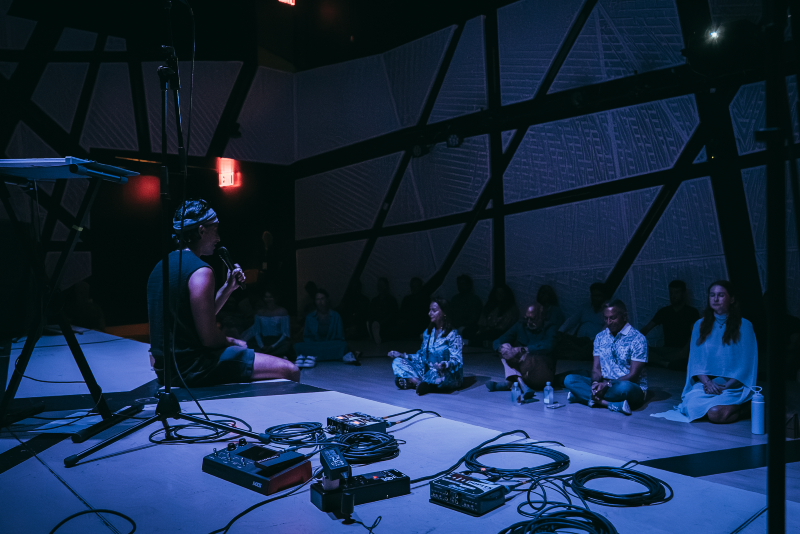
Following the album’s release, ShiShi performed an Indigo live concert in Brooklyn at National Sawdust on September 6, 2025. The show featured full-band arrangements and fluid production. A live album will follow Indigo, along with more tour dates and wellness-driven performances designed to give audiences not just a show, but an experience of transformation.
See some snapshots of the special performance below (credit: Gokul Madathil):

Follow ShiShi:
Spotify – YouTube – Instagram – TikTok