

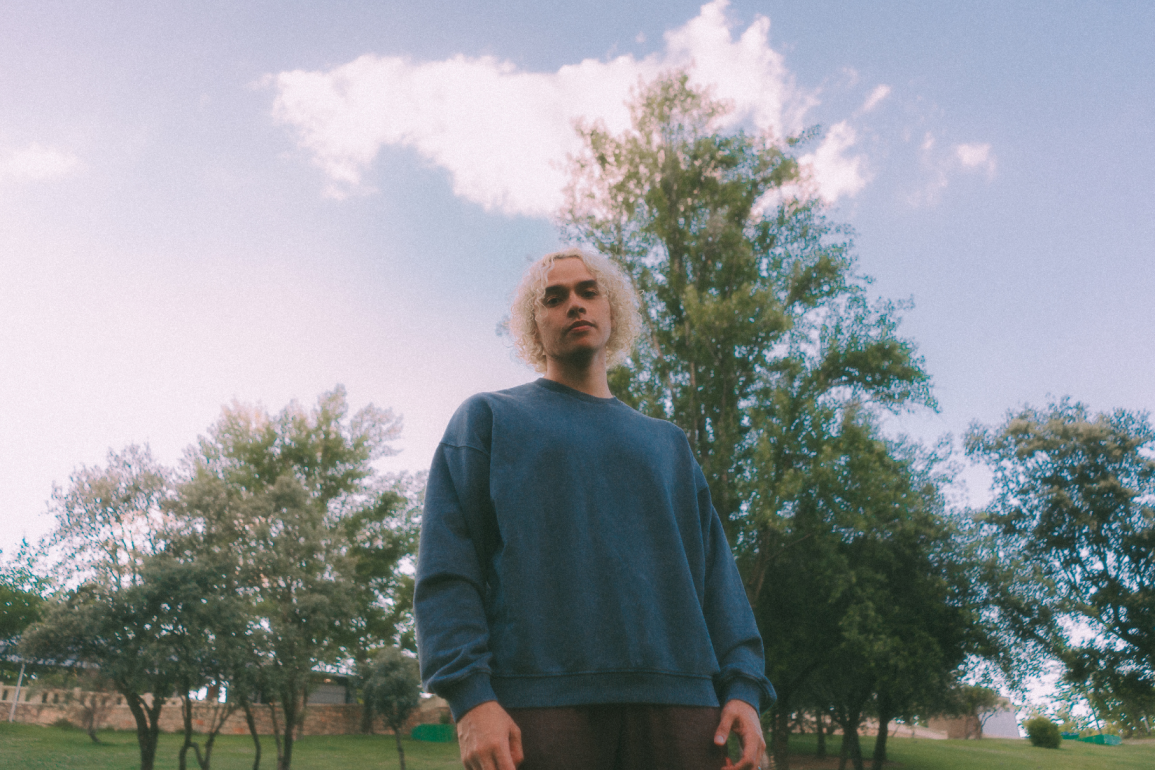
Spain-based producer and composer Javier González, the lifeforce behind vesky, has spent the past decade carving out an intimate corner of the electronic music landscape through a sound rooted in ambient, future garage and lo-fi. Beginning independently in 2016 after discovering music production as a teenager in Venezuela, González developed his craft largely from his bedroom studio, teaching himself production and multiple instruments while drawing inspiration from artists such as Burial, Sorrow and Day Wave.
After leaving film school in 2017 to pursue electronic music full-time, he continued to build a deeply atmospheric catalogue defined by haunting piano melodies, ethereal textures and mellow two-step rhythms. His music has since reached audiences around the world, with two Lofi Girl competition wins and three releases through the influential platform marking significant milestones in the project’s journey.
Now based in Spain, González continues to approach vesky with the same DIY spirit and curiosity that defined its beginnings, using electronic music as a vehicle for emotional, cinematic and reflective storytelling. We caught up with González to discuss the origins of vesky, his creative process, the evolution of his sound and what continues to inspire him.
Listen to his newest release, ‘Dawn’, while reading the interview below:
You started vesky independently in 2016. What did the project look and sound like in those early days, and what did you want it to become?
When I started vesky in 2016, it came at a turning point in my life. I had just dropped out of film school after realizing it wasn’t what I wanted to do for the rest of my life, and music was the thing I kept coming back to. I’ve loved music for as long as I can remember. There’s actually an old family VHS tape where my mom gives me a toy guitar as a kid, and you can see how completely fascinated I was by it. So in a way, that connection was always there long before I knew music could become my career.
When vesky first started in late 2016, I was heavily inspired by melodically driven electronic artists like Seven Lions and Illenium. I’ve always been drawn to the emotional and melodic side of electronic music, but a real turning point came when I discovered Falling Deeper by Kisnou, who is now a good friend of mine, and Blure. That track opened a completely different world for me and pushed me deeper into ambient music, future garage (genre) and more atmospheric, emotional electronic sounds. That was when the identity of vesky really began to take shape.
At the time, I didn’t have an industry team, a network or any real roadmap. It was basically me, an old laptop running Ableton Live 9, and a lot of music that inspired me to keep experimenting. I genuinely never imagined that the project would eventually reach millions of listeners around the world, lead to international collaborations, licensing opportunities and everything else that came later. In the beginning, I simply wanted to create a world around the music and make something people could connect with emotionally, based on the sounds and feelings that were moving me at the time. Looking back, I think that very introspective and independent foundation shaped everything vesky eventually became.
You grew up in a small town in Venezuela and taught yourself to produce and play multiple instruments. How did that experience shape you as an artist?
Growing up in a small town in Venezuela meant there wasn’t really an established music industry around me, and the ambient music scene was basically nonexistent locally at the time. Because of that, I had to learn almost everything on my own, mostly through YouTube, deep listening, experimentation, and simply spending countless hours trying to understand why the music I loved sounded the way it did.
I spent years teaching myself production, recording, mixing and different instruments. In a way, being geographically removed from a traditional music scene gave me a lot of freedom to develop my own taste and techniques without worrying too much about how things were “supposed” to be done.
It’s actually funny because, even now, when I talk with producer friends abroad, they’re sometimes surprised or even confused by the way I approach certain things. Some of my methods can be almost the opposite of what would be considered the conventional industry approach. But I think that’s a direct result of how I learned, because I wasn’t following a formal teaching or sitting in a studio watching someone else’s workflow, I was experimenting until I found something that worked and sounded right to my ears.
At the same time, that experience taught me to be extremely resourceful. When you’re independent and don’t have a large team around you, or even a local school or scene where you can learn from others, you become very comfortable figuring things out yourself.
I think that mentality ended up shaping much more than just my music. It’s still a big part of the way I approach creativity, problem-solving and even the business side of my
career today.
You originally pursued film before leaving film school in 2016 to focus on music. Does your interest in cinema still influence the atmospheric and emotional quality of your productions?
Definitely. Film, especially photography, has always influenced the way I think and see music. Even when I’m producing a track, I often have Pinterest open with a large board I’ve built over the years filled with images, colors, landscapes, film stills and visual references that inspire me. I naturally try to connect music with imagery because, to me, they work together as different ways of telling a certain story.
I think that also explains why licensing became such a natural extension of vesky later on. Long before I was thinking professionally about sync, I was already approaching many of my tracks almost like soundtracks to imaginary films or scenes given the nature of the film background I had during those film school teachings. So when the music eventually started being used in visual productions, commercials and other projects, it felt like a very natural way to connect both worlds that I’ve always loved.
Your sound moves between ambient, future garage, lo-fi and indie influences. How would you describe the sound of vesky in your own words, and how has it evolved over the years?
I would describe vesky first and foremost as emotional, atmospheric electronic music. The genres around the project have changed quite a bit over the years. There have been periods that leaned more heavily into future garage (between 2017-2021), others into lo-fi, dark ambient, and even organic house. But regardless of the style I’m exploring, the atmospheric and ambient side has always remained at the heart of the music.
Most of the time, I either start with or eventually introduce some kind of atmospheric layer into the production, whether that’s a pad, a heavily reverberated arpeggiator, textures, or other harmonic elements that create a kind of bed underneath everything else. I like those elements because they can add depth and emotion without necessarily demanding attention on their own.
When I first started making this kind of music, one of my biggest focuses was actually learning as many different ways as possible to create pads and atmospheric sounds. I spent a lot of time experimenting with layering, reverb, modulation and sound design, and I think that process ended up becoming a big part of my musical identity.
Over the years, I’ve become much less interested in fitting vesky into one specific genre. What matters more to me now is that, whether I’m working on future garage, ambient, lo-fi or something more organic, there is still a certain emotional and atmospheric character that makes it feel recognizably like vesky.
Artists such as Burial, Sorrow and Day Wave have influenced your work. What have you taken from these different musical worlds?
Burial and Sorrow showed me how much emotion can exist inside electronic music without needing extremely complicated arrangements. There’s so much atmosphere, texture and humanity in their music. Sorrow tends to be more complex in terms of musicality than Burial, but Burial has a lot of depth in his dark, almost mysterious identity that reflects a lot in the way he writes music.
Day Wave comes from a different world, it’s mostly dream pop/indie but I really connect with the simplicity and emotional quality of his songwriting and guitar production.
Those influences helped me realize that electronic and indie music don’t have to exist separately. Recently I’ve been enjoying bringing more guitars and organic elements into the atmospheric world I’ve built with vesky, especially when it comes to sleepy lo-fi productions.
Endeavour has been used by Formula 1, NYT Cooking and Range Rover, while also appearing in around 49,000 TikTok videos. When did you first realise the track was reaching people on that scale?
It happened very gradually, which made it even more surprising. I first realized my music was starting to have a life of its own on TikTok when I discovered that Ricky Martin had used my track Aura with Liam Thomas in one of his posts. I grew up listening to him, like a lot of people in Latin America, so seeing that was a WOW moment for me (and my family!)
After that, I started paying much more attention to where my music was being used on the platform, and that was when I realized Endeavour had started spreading on a much larger scale. I began finding thousands of videos using the sound, including posts from major brands and organizations such as Formula 1, Range Rover and NYT Cooking. Discovering this was especially surreal because of the size and international reach of those platforms and the impact of those brands in the world. At the same time, the track kept spreading organically through tens of thousands of TikTok videos, which was incredibly rewarding to discover.
I definitely consider that one of the most meaningful milestones in the project. Becoming part of the Musicbed roster in 2019 was another major milestone for me. Since then, my catalog has been used across a wide range of audiovisual and commercial projects, including work connected with international brands and productions.
I think that’s one of the most fascinating things about releasing music today: you can make something independently, alone in your studio, and eventually hear it attached to images, stories and campaigns being seen by millions of people around the world.
As an independent artist, what has it been like seeing your music travel into so many different contexts, from streaming platforms to social media and major brands?
It’s probably one of the most rewarding parts of the journey. I’ve always made vesky music in a very intimate way, usually sitting alone in a studio and working on something until it feels right. Then suddenly that same piece of music can end up reaching listeners in completely different countries or being licensed for an automotive film, documentary, game or commercial project.
That contrast between creating something privately and seeing it develop a life internationally still feels special, almost surreal to me. This is what I’d like to teach the new generations: that you can actually grow up by doing what you love in the way you love to do it and still have an impact in the world just by believing you can do it.
God has also a leading role in my life. After I gave my life to Him things have started taking place and I’ve felt more purposeful, which have helped maintain myself inspired to keep pushing my career forward.
You have released music both independently and through labels including Lofi Girl and Dreamscape. What have you learned about balancing independence with working alongside established platforms?
I’ve learned that self-releasing and release with labels don’t have to contradict each other. Most of my career has been built independently, and I really value having control over the creative direction and the rights of my music, as I’ve encountered scammers that actually tried to end my music career by trying to own my assets without paying me and without any legal contractual relationship.
At the same time, working with platforms and labels such as Lofi Girl and Dreamscape has allowed the music to reach audiences that might not have discovered it otherwise, especially being part of Lofi Girl’s catalog, having my music featured on their Spotify playlists, and being streamed on the iconic Lofi Girl 24/7 Youtube Radio.
I’ve also been fortunate to receive recurring support from Spotify editorial playlists over the years, including playlists such as Brain Food, Chill Tracks, Lofi Meditation, Lush Lofi and Lofi Sleep, mostly coming from my self-released catalog which have helped me to remain independent without risking my rights.


For me, the ideal balance is retaining ownership of most of your music, while working with partners on certain releases. Making sure they genuinely understand the music and can help you to push your music forward, but being careful to choose labels right (and know your music rights, that is a must).
Across your projects and collaborations, your music has accumulated more than 65 million global streams. Looking back at where vesky began, how do you reflect on that journey?
Honestly, It’s difficult to fully process. It all started in my bed, experimenting with a very slow laptop and music that I deeply loved as reference. There was no team, no audience and no guarantee that anyone outside my own circle would ever hear the music. I was simply finishing songs and feeling happy just by uploading them on Soundcloud.
It really started to take off when the channel Fluidified, an incredibly influential Future Garage and Ambient Youtube channel back in 2017, uploaded my first vesky song ‘With You’
About the amount of streams accumulated, what’s meaningful to me isn’t only the number itself, but everything that happened around it: people discovering the music internationally, collaborations with the artists that shaped my sound, editorial support, having the amazing opportunity to be part of Musicbed roster and seeing songs continue to impact people years after they were released.
It makes me especially grateful that something built independently from Venezuela and fully developed from Spain was able to travel that far.
Outside of vesky, you co-founded Seven Tapes, an independent music company focused on artist development, curation and marketing. How did your experience building vesky lead to the creation of Seven Tapes?
Seven Tapes grew very naturally from everything I had learned while building vesky independently. It was like a school to me. Over the years I had to learn much more than music production. I learned about distribution, licensing, music rights, digital advertising (via Meta), audience development, playlist curation, branding and how to sustain an independent project over time.
Eventually I realized that experience could also help other independent artists, specially within the Christian music scene. Through Seven Tapes, we’ve been able to work across several artist development, music marketing and curation, while building campaigns that have reached millions of people and helped generate streams and new audiences for independent music through Meta ads.
I’ve also spent a lot of time evaluating music through professional curator platforms such as SubmitHub, Playlist Push and Groover. That side of my career has given me a very different perspective because I’m constantly hearing new artists and thinking critically about songwriting, production, identity and how music connects with an audience. In many ways, Seven Tapes is the business and community side of everything I learned through good and hard times with vesky.
What advice would you give to a young producer trying to build an international career from a small town without an established music scene around them?
Don’t wait for your location or circumstances to give you permission to start, as the Nike tagline says: Just Do It. When I began, as mentioned, I didn’t have access to a traditional music industry or prestigious schools around me. Most of what I learned came from spending thousands of hours making music, experimenting, studying other inspiring artists and putting work into the world.
The internet has made geography much less important than it used to be 20 years ago. You can collaborate internationally, distribute music worldwide and build an audience from almost anywhere just by emailing and connecting with the right people. I think the important thing is to develop something genuine enough that people can recognize it as yours. Skills can be learned, but having your own way to do things is what gives the music longevity and identity.
Ah, and don’t think you can do it entirely alone. Creating connections with people in your same journey can be life-changing. Open yourself to make friends abroad (they will become such a big part of your story).
After nearly a decade of vesky, what do you still want to explore creatively, and what can listeners expect next?
I feel like vesky is always trying to discover new ways to do atmospheric music. I’m increasingly interested in exploring more genres and bringing into the atmospheric electronic foundation of the project. I don’t want to completely leave behind the ambient and future garage elements that people associate with vesky, but I want to keep expanding what the project can be.
I started to put God in the center of what I do as well, at the point that people not only relax to the music, but also pray and connect with Him through vesky musical approach, which is so amazing for me.
After almost ten years, I’m grateful that I’m still curious about making music and bringing new ways to do sounds. That’s probably what matters most to me. I want to continue evolving without abandoning what made me start vesky: connect people through atmospheric electronic music.
Follow vesky on social media: