

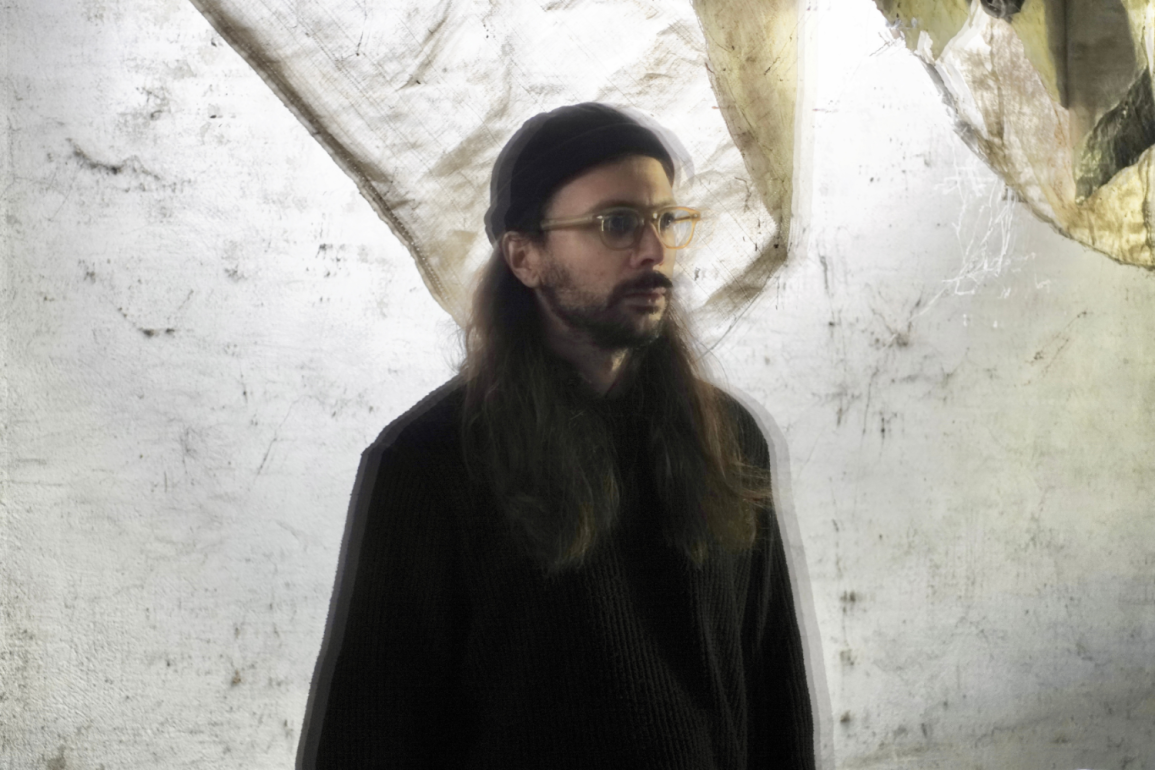
In the dynamic world of contemporary music, Edoardo Petracci stands out as a unique voice that blends tradition with innovation, and we recently had the opportunity to catch up with him. Originally from the Marche region in Italy and now based in Rome, Edoardo is a composer and performer with a rich background in classical double bass, composition, and film scoring.
His debut album, By This Window, which is released on 5 June 2026, showcases his distinctive style, merging classical instruments with modern electronics for an intimate and immersive sonic experience. Petracci also contributes to theatre and cinema, with notable works for international projects such as The Game and Exodus. His film score for Animalia premiered at the Sitges Film Festival and earned honours at the Trieste Science+Fiction Festival.
How long have you been releasing music, and what has been a standout moment in the journey so far?
By This Window is actually my debut album, but I have been working in music as a composer and performer for many years across different contexts, including concerts, theatre productions and film projects.
In many ways, this record represents the synthesis of the entire path I have travelled up to this point. It took me time to find a dimension that truly felt like my own, and I believe this work is where all the experiences I gathered over the years finally came together.
The most significant moment so far has been the journey that led to the album itself, particularly the crowdfunding campaign that made its production possible. Seeing so many people connect with and support the project was incredibly meaningful and motivating for me.
What inspired you to start making music in the first place?
When I was a child, there was an old Farfisa organ in my grandparents’ house that nobody played anymore. I used to spend Sundays experimenting with it, listening to the bass notes from the pedalboard, changing the different stops and discovering how the sound changed from one combination to another.
I believe that was my very first encounter with music, through curiosity and that old organ.
Over time, I enrolled at the Conservatory, and what had started as curiosity gradually became a true passion and a lifelong companion.
But learning to play an instrument wasn’t enough for me. I wanted to understand what was happening behind the music, how it was built, why certain combinations of sounds worked and others didn’t.
Alongside instrumental studies, I began studying composition and eventually started writing for different ensembles.
At the same time, digital music production was becoming increasingly accessible, and I still remember buying my first computer. It was through that machine that I began exploring a whole new world, becoming interested in sound, production and timbral research.
Over the years, I have tried to bring all these elements together, and even today, my work emerges from the meeting point between these different experiences.
How would you describe your sound to a new fan or supporter?
I don’t really identify with a specific genre or label. In fact, I think my work stems precisely from a desire not to belong to a single musical category.
My music tries to bring different worlds into dialogue: acoustic and electronic instruments, classical tradition and contemporary experimentation, compositional writing and a performative approach.
When I was studying double bass at the Conservatory, as much as I loved its timbre and expressive possibilities, I always felt limited by playing only one instrument. Being confined to a single timbre, a specific register or just one aspect of music always felt restrictive to me. I constantly had the feeling that there was something else to explore beyond that sound, that register or that musical function.
Gradually, rather than being part of an ensemble, I found myself wanting to build my own personal ensemble, made up of different instruments that could coexist and that I could control and play at the same time—or almost.
What interested me was creating my own sonic space, where different elements could live together without clear boundaries, and where I could change direction freely at any moment.
Tell us more about your album, By This Window. What was the emotional or artistic starting point for that album?
The idea for this album goes back a long way. It began with fragmented ideas, unfinished sketches, scattered recordings and notes scribbled on manuscript paper.
It was a project I had wanted to make for a long time, something I had always been moving towards, but for one reason or another, I never managed to complete. Until one day, I realised I could no longer postpone it.
I was looking for the right place where I could let those ideas breathe, gather all the fragments and bring them together. Eventually, I understood that there was only one place I could go.
So I moved my studio into my grandparents’ old, long-abandoned country house in the Sila Mountains, in Southern Italy — a place that is deeply special to me, full of memories and surrounded by the silence of nature.
I began writing there, surrounded only by the essential things, and I stayed until I felt the album was finally complete.
Is there a specific story you wanted to tell on this record? If so, tell us about it.
Not really. I didn’t have any particular expectations when I left to record the album. I simply wanted to retreat into silence with all my instruments and try to create something that truly belonged to me.
Only after finishing it did I realise that, without intending to, a large part of my journey had found its way into those pieces: the piano, which was my first love; the years spent studying double bass; composition, orchestration, electronic experimentation, but also the attempts, mistakes, achievements and fresh starts that have accompanied me throughout the years.
For a long time, I wanted to make an album that could gather all these experiences together. I don’t think I could have done it any earlier. At some point, I simply felt that the right moment had arrived.
The place where I worked also played an important role. It was filled with memories and sensations that belonged to another time, and that inevitably influenced the images that emerged while I was writing, inspiring and moving me.
It was a unique flow, and I believe that if I had tried to tell that story consciously in any other way, I wouldn’t have succeeded. It simply emerged naturally, without planning it.
Even the album’s tracklist follows the exact chronological order in which the pieces were written, day after day, week after week. I never felt the need to rearrange it; it seemed like the most honest way to preserve that journey exactly as it had unfolded.
You compose for both live performance and visual media like theatre and film. How does your creative process change depending on the medium?
Working with other art forms such as film and theatre is both stimulating and rewarding.
In reality, my creative process doesn’t change; what changes is the approach to that process and its purpose.
There is a story you have to relate to, images in film and scenes in theatre. That’s where the real difference comes in: you have to be in service of the image, accompanying it without overpowering it, finding the right idea that remains true to what the image or the scene is asking for.
In theatre, I often perform the music live on stage alongside the actors, which creates a very direct relationship between music, acting and the whole performance.
You know the music is right for a movie or a play when you don’t notice it while you’re watching it, but when it’s not there, you miss it.
What is your go-to remedy for overcoming creative block?
When I realise I’m stuck, the first thing I do is stop.

I have many interests outside of music, and sometimes there are moments when ideas simply stop feeling satisfying or meaningful.
That’s usually when I realise I’ve been immersed in the same work for too long. In those moments, I look for nature, silence and anything that helps me reconnect with myself.
When I return to the studio, new ideas tend to emerge naturally on their own.
What inspires you most creatively at the moment, both musically and outside of music?
To be honest, I don’t spend much time looking for inspiration. Most of the time I study, experiment and work. Ideas tend to emerge naturally from the process itself, through time, repetition and constant practice, rather than from a specific source of inspiration.
More than inspiration, what I often need is sedimentation. I need time for experiences and for the things I’m working on to settle and reveal their meaning. Music usually arrives afterwards, as a consequence of that process.
On a related note, lately I’ve been spending a lot of time exploring old recording technologies, especially magnetic tape, from reel-to-reel machines to cassette recorders.
I have several of these machines in my studio, and I try to incorporate them into my work on a regular basis.
I had already begun experimenting with them while making By This Window, recording much of the material to tape, but I’m still exploring their possibilities and trying to understand how they can shape and influence sound.
I’m fascinated both by the way they work and by the physical, almost tangible quality they give back to the music.
At the same time, there is also something about their philosophy that resonates with me. In a world that constantly demands and celebrates perfection, tape reminds you that imperfection is acceptable. You don’t have endless takes available, you can’t endlessly edit everything afterwards, and the result certainly won’t be algorithm-proof.
In a way, tape reminds me that music is also a gesture that happens in time and cannot be completely controlled or corrected afterwards. I like the idea that a recording preserves not only the sound itself, but also traces of the immediacy of the moment in which it was made.
What can fans expect next from you?
I tend to stay very focused on the present and try not to create expectations for myself, much as I did with this project.
I prefer to let things unfold naturally rather than planning too far ahead.
In the near future, my main goal is to bring By This Window to the stage. I already have a few concerts scheduled that will be announced soon, and I hope to present the album in as many places as possible.
What I do know is that I will continue studying, exploring and performing, just as I always have, following the path I have begun to trace—one that, once again, I don’t yet know where it will lead.
Follow Edoardo Petracci on social media:
Instagram | Facebook | BandCamp | Spotify