

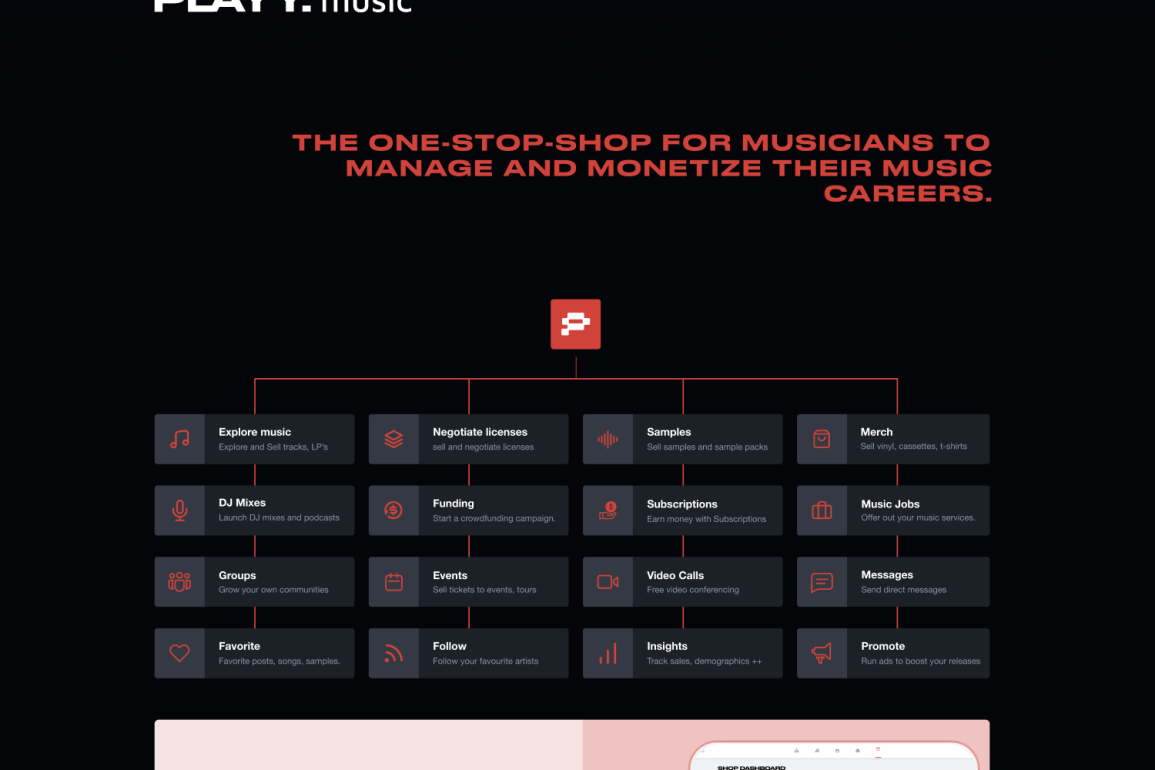
Since its launch earlier this year, PLAYY. Music has boldly positioned itself as “the one-stop-shop for musicians to manage and monetize their music careers.” At first glance, this was a striking claim – ambitious, even daring. The platform promised to bring together every essential tool an independent artist might need: from music sales and streaming to licensing, ticketing, fan subscriptions, sample packs, PR support, and split payments, all housed within a single, unified ecosystem.
In the months following, similar concepts have begun to emerge from industry giants. In October, SoundCloud introduced its “All-in-One Artist Subscription,” and, most recently, Beatport launched ‘Beatport for Artists and Labels is your one-stop destination for opportunities, tools, and support ‘. Both campaigns emphasize a comprehensive, centralised approach to artist services. The overlap in language and positioning is hard to ignore, prompting the question: has the independent music platform PLAYY. Music quietly influenced the strategic direction of these major players?
The timing certainly suggests more than coincidence. PLAYY. Music was developed out of a clear need expressed by independent artists themselves, who have long grappled with fragmented tools and scattered revenue streams. Managing a modern music career often involves juggling multiple platforms for sales, promotion, ticketing, and collaboration – resulting in lost time and income. By consolidating these functions, PLAYY. sought to simplify this complex landscape, creating a space designed specifically with artist independence in mind.
This move toward artist empowerment and platform centralisation reflects a broader shift within the music technology industry. Legacy streaming services have traditionally treated artists as content providers, funneling most revenue through major labels and distributors. In contrast, platforms like PLAYY. reframe artists as entrepreneurs who deserve control over their creative and financial futures. Features such as direct sales, fan memberships, collaborative split payments, licensing opportunities, and integrated marketing tools position PLAYY. as a comprehensive career ecosystem rather than a mere distribution channel.
The rise of these artist-first platforms signals a changing music economy that increasingly values transparency, autonomy, and direct engagement between creators and fans. For PLAYY., seeing established companies adopt similar language and frameworks serves not only as validation, but as a sign that the industry is evolving in the direction the startup championed from the beginning.
It is worth emphasizing that PLAYY. does not view these developments as competition, but rather as an endorsement of their vision. The platform aims to lead the next phase of music technology, where independent artists have access to integrated tools that truly support every facet of their career.

While the ultimate impact of this shift is still unfolding, PLAYY. Music’s early adoption of a holistic, artist-centered approach underscores an important trend: the future of music tech may well belong to those who prioritise creators over corporations. The question now is how these platforms will continue to innovate and support the diverse, evolving needs of artists worldwide.