

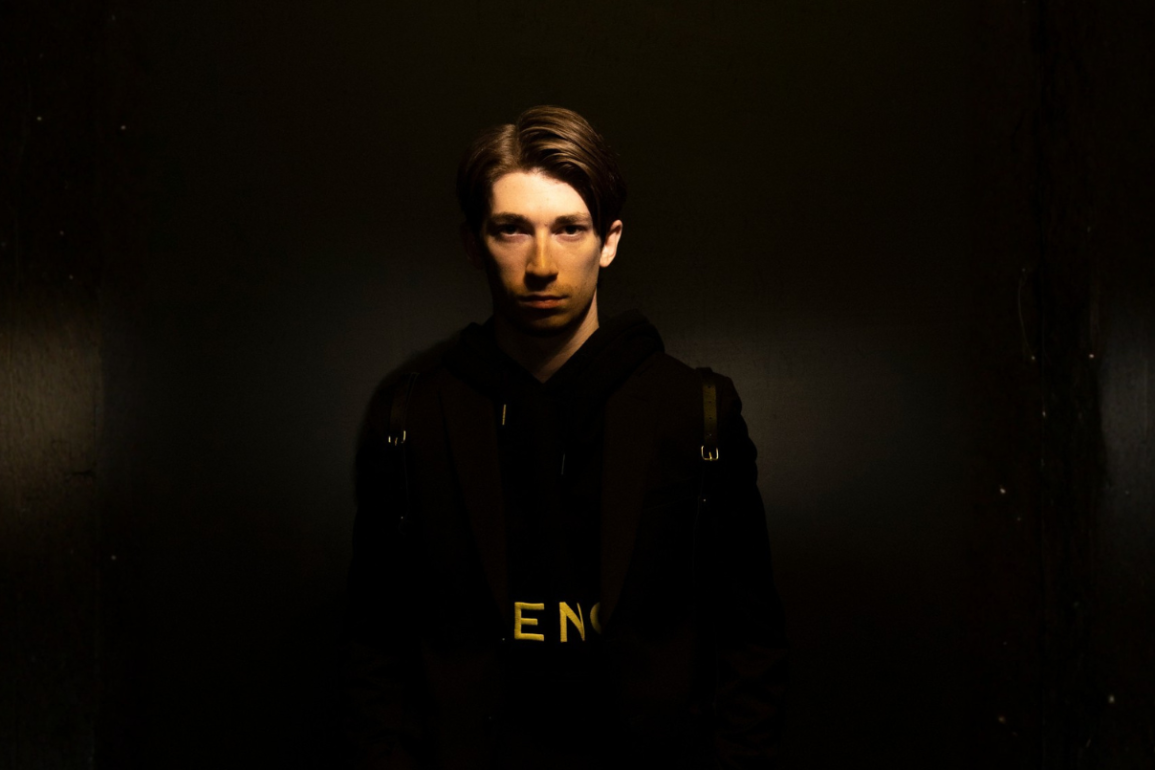
Photo credits: @Georgii_
We recently had the opportunity to catch up with electronic producer extraordinaire, THE ILLUSTRATED MAN, who unveiled his new single ‘Dance of Shadows’ with collaborator Sasha Carassi on 8 May 2026.
Born in Yerevan, Armenia, and currently based in Dubai, THE ILLUSTRATED MAN initially arose as a fusion of cinema, visual art, and literary science fiction. Drawing inspiration from Ray Bradbury’s iconic work, The Illustrated Man, the artist embodies a symbol of ever-evolving narratives, etched not onto skin as in Bradbury’s story, but into sound.
‘Dance of Shadows’ has been taken from THE ILLUSTRATED MAN’s debut album, The Skin Of Time, set for release on 12 June.
Listen to ‘Dance of Shadows’ while reading the interview below:
Paint us a picture: what sparked your passion for the arts in the first place?
Was there a single moment or experience that solidified your decision to pursue this path?
Music always felt less like entertainment to me and more like architecture for emotions. I grew up obsessed with atmosphere — films, books, old synth records, the feeling of places at night. I think the real turning point came when I realised certain sounds could completely change how a memory feels. That fascinated me. Once I started experimenting with synthesisers and recording ideas, I understood this wasn’t just a hobby anymore — it became a way to translate emotions and imagery into something tangible.
When you create, what leads the way – a feeling, a story, or the sound itself?
Usually a feeling comes first. Then that feeling starts creating images in my head, almost like scenes from an unwritten film. Sound comes after that. I rarely begin with drums or arrangement — I start with atmosphere, harmony, texture. I want a track to feel like stepping into a place that already existed before the listener arrived.
What’s in your toolkit? Share the gear, gadgets, or software you can’t create without.
My Moog Sub37 is probably the instrument I feel most emotionally connected to — it has this raw, unpredictable energy. I also use a Nord Grand for piano textures and melodic sketches. For software, Ableton Live is the center of everything. I use a lot of analogue-inspired processing, granular textures and cinematic layering. I’m less obsessed with technical perfection and more interested in creating depth and emotion.
What’s your go-to ritual or trick for getting into the creative zone?
Nighttime helps. Silence helps. I usually dim the lights, put on something atmospheric — sometimes movie score, sometimes old ambient records — and just improvise without thinking too much. The best ideas usually appear when you stop trying to force them.
What’s the one item you always keep within arm’s reach while creating or performing?
A notebook. I constantly write down phrases, visual ideas, fragments of stories or emotions. Sometimes a single sentence becomes the foundation for an entire track months later.
How did you ultimately end up defining your sound?
I stopped trying to fit into electronic music scenes and started embracing cinematic storytelling instead. My sound became clearer once I accepted that I was more interested in tension, atmosphere and emotional narrative than club formulas. There are elements of electronica, indie, progressive and film music in what I do, but the emotional world behind it is what really defines the project.
How has your creative process or perspective shifted since you started your journey?
In the beginning I was chasing “good production.” Now I’m chasing honesty. I’ve learned that imperfections can sometimes carry more emotion than technically flawless music. I also became much more patient. Some tracks need months before they reveal what they actually want to become.
Walk us through a recording session: what’s the most memorable moment you’ve had in the studio?
One night I was working on a piece that eventually became part of my debut album. I had this long atmospheric synth sequence running through analogue delay, and suddenly everything aligned — the harmonies, the textures, the emotion of the moment. It felt less like composing and more like discovering something that already existed somewhere. Those moments are rare, but they’re why you keep creating.
What are your opinions on generative AI music tools such as Suno? Is it something that aids in the creative process, or take away from it?
I see AI more as a creative instrument than a replacement for artists. It can be incredibly inspiring for generating unexpected textures, vocal ideas or atmospheres. But emotion, intention and artistic identity still come from humans. Technology has always changed music — synthesisers did, samplers did — and I think AI will simply become another tool. The important part is what you choose to say with it.
Are there any unexpected or dream collaborations hidden in your work?
There are definitely a few collaborations in development that people probably wouldn’t expect from me stylistically. I’m very interested in crossing worlds — combining cinematic electronic music with voices or artists from completely different backgrounds. I like contrast.
Any side projects you’re working on?
I’ve been developing visual concepts and narrative ideas connected to the album universe. The project has always existed somewhere between music and cinema for me, so I’m interested in expanding it beyond just audio.
Who’s an emerging artist you think deserves more recognition right now?
There are so many incredible independent artists right now working between electronic and cinematic music. I’m especially drawn to people creating emotionally immersive work without chasing trends. Those are usually the artists who stay with you the longest.


What’s the strangest or most surprising song currently on your playlist?
Probably something completely opposite to what people expect from me — old jazz recordings or obscure ambient music from the 80s. My playlists are chaos in the best possible way.
Which song, album or playlist do you never get sick of no matter how many times you listen to it?
Ennio Morricone’s film scores are something I can endlessly return to. There’s a timeless emotional depth in his compositions — they feel cinematic, intimate and massive all at once. He had this incredible ability to make silence and space feel just as powerful as melody.
Are there any unexpected hobbies or projects you’re exploring outside of your main work?
I’m very interested in visual aesthetics, architecture and storytelling. I spend a lot of time thinking about spaces, textures and atmosphere — even outside music. I think all creative disciplines eventually influence each other.
If your life and career were an album, what would its title be, and what’s the hidden track only your fans would know?
Probably The Skin of Time. It captures the idea that experiences leave invisible marks on us. The hidden track would be something unfinished and fragile — because I think the most personal emotions are usually the ones left unresolved.
Give us a glimpse into the future – what surprises or milestones are coming up for you this year?
This year is centered around the release of my debut album and the visual world surrounding it. There are new singles, collaborations, live concepts and several projects expanding the cinematic side of The Illustrated Man universe. It feels like the beginning of a much bigger story.
Famous last words?
Every story leaves a mark.
Follow THE ILLUSTRATED MAN:
Instagram – Soundcloud – Spotify