


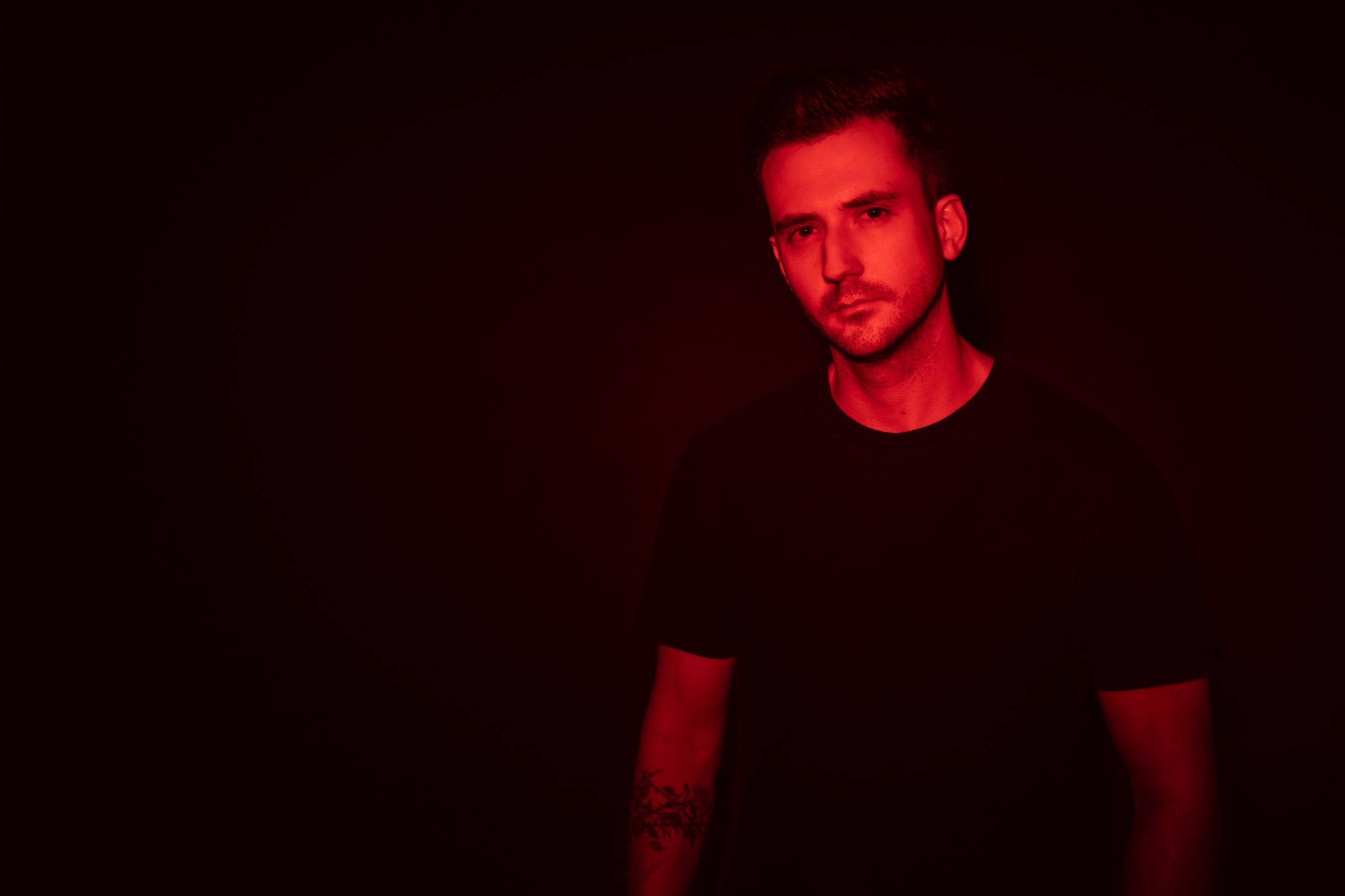
With his distinct blend of emotional depth and club-ready precision, Stefan Rose is quickly carving out a name for himself in the global electronic scene. The rising producer returns with This Feeling EP, a two-track release on Frequenza, the label helmed by Nihil Young, that highlights his evolving sound across melodic and darker sonic textures. Featuring the entrancing vocals of Sophie Joe, whom Stefan met during a gig in East London, the title track delivers a stirring peak-time moment, while the B-side cut ‘Tusk’ leans into powerful percussion and immersive atmospheres. Having already topped charts with his debut on Dear Deer and holding a radio residency at Bloop London, Stefan continues to bridge the energy of the dancefloor with a cinematic edge, cementing his status as one of Melodic Techno’s most compelling new talents.
Listen to the EP and read our exclusive interview with Stefan below:
Hi Stefan, thanks for chatting with us!
Thank you for having me!
Let’s chat about your brand new EP. What drew you to collaborate with Sophie Joe on ‘This Feeling’ and how did her vocals influence the final direction of the track?
I was DJing in East London last year and met Sophie by chance when she asked for a track ID. We started having a friendly chat and quickly realized that there was a lot of overlap in our electronic music tastes. When she mentioned she was a singer, I thought it could be fun to work together, as shared musical interests can help different artists align on the sound they want to achieve. The next day, I checked out some of her recordings online and was blown away by her voice. At the time, ‘This Feeling’ was just a melody in my head, some lyrics I wrote, and a sense that it needed a powerful female vocal. Working with Sophie in the studio turned out to be an awesome experience, and she provided such dynamic variations on the words and delivered mesmerizing ab libs. I ended up including many of these unscripted bits in the final track because they resonated so strongly and added to the overall intrigue of the song.
‘Tusk’ feels like a powerful follow-up to ‘This Feeling’. Was there a narrative or emotional thread that connected the two tracks for you?
I made the two tracks around the same time. Structurally, they’re different pieces – ‘This Feeling’ is centered on Sophie’s vocals, whereas ‘Tusk’ features prominent percussion – but both share a deep, somewhat darker melodic vibe, yet also some uplifting moments. Whenever I write lyrics, I try to give them multiple meanings, which I feel can prompt deeper introspection in the listener and perhaps even a little mystery.
‘This Feeling’ could be a song about romantic desire just as equally as it could be about personal ambition, and I’ve since heard from others who had different but equally interesting interpretations. ‘Tusk’ doesn’t have lyrics at all, but the heaviness of the drums, coupled with the groove of the bassline, reminds me of a herd of elephants, and that drove the rest of the exotic and tribal sound design. Each track from the EP has a clear focal point around which the rest of the song comes together, even if those focal points are quite different.

How do you balance the emotional, melodic side of your sound with the darker, club-focused energy in your production?
It’s a very fine balance, and one I revisit often throughout my production process. Whenever I’m looking at a blank song canvas, I usually start with a gentler, more emotive core idea and then cover it with a harder, more aggressive exterior. You could say it’s perhaps warmer on the inside yet colder on the outside. Maybe this in part reflects my own personality, as it just seems to come out naturally in the music I create.
I’ve always had an affinity for strong melodies – my first electronic records were Trance – hence some sort of melodic aspect is always prevalent in my tracks. That said, I also gravitate towards more powerful, even harsh sounds – percussion in particular, but also certain synthesizers. Balancing these two sometimes competing aspects is what often forms the foundation of my sound. Ultimately, I hope to make music that is full of multiple layers and meanings, which can keep the audience engaged both at home and especially on a dance floor.
When you look back at your early sets in Belgium, what do you think has stayed consistent in your style, and what has evolved the most?
When I started DJing in Belgium, I played a lot of Electro House, which was full of big synthesizers, impactful vocals, and prominent basslines. I’m still a fan of synth and vocal forward music to this day. I’d say I’ve since evolved the most in terms of percussion, as I’ve slowly but surely been shifting towards a harder and more percussive sound. “Groove” was honestly not a concept that was top of mind up until the last few years. These days, I spend a lot of my studio time focusing on drum selection, building out the core groove with the bassline, and ensuring that the rhythm of the song can reliably carry a dancefloor. But all in addition, of course, to including melodic elements and/or vocals, which remain integral to my style.
What’s in your toolkit? Share the gear, gadgets, or software you can’t create without.
Most of my tracks feature the software synthesizer Diva, at least to some degree. It’s such a powerful tool that can make a broad array of different sounds, and shines especially in analogue emulation situations. I also love the software synthesizer VPS Avenger, which specializes in the exact opposite, namely, very synthetic and digital sounds. Finding clever ways to bridge analogue and digital sonic palettes really helps me create music which has that harder / softer balance that I mentioned earlier. That said, I also strive to work with talented musicians – vocalists, guitarists, or drummers, often in live studio settings – to add natural and human elements to my music. I’m a big fan of balancing the organic with the synthetic, and emphasizing contrast, which feeds this warm versus cold narrative that’s common throughout my music.
You’ve lived and worked in some of the world’s most vibrant electronic music scenes. How has splitting your time between New York and London changed the way you create or perform?
I think in life it’s helpful to have perspective, and living in different parts of the world, amongst various cultures and languages, certainly helps with this. Music is no different. I spent so much time in New York – indeed enough to make the city feel like an adopted home – that the scene there has always, and will always, have a special place in my heart.
That said, London has been and continues to be one of the world’s most important music cities, not just for electronic but for any genre. It’s incredibly valuable to spend time here and see the sounds and styles that are getting traction in real time, and the vibrant scenes supporting them. Not to mention, you also have the added proximity to all the other European hubs where my kind of music tends to blossom.


How does holding a residency on Bloop London influence your creative output? Do you approach radio curation differently from your club sets?
Bloop is a great station, run by a strong team and backed by a tight community. It’s a nice outlet to test out my own tracks and host guest DJs, which I nearly always do. Some of my radio shows are focused more towards casual listening, and hence a bit less powerful, whereas other radio shows are more like my club sets. It really depends on my mood that day and who I’m hosting!
What does a perfect night out look like for you, both as a DJ and as a raver?
I really like it when DJs embark on storytelling and take the audience on a journey. This sounds easier than it is, and perhaps even cliché, but it’s something I feel strongly about. I was a DJ long before I was a producer, and I have a deep appreciation for artists who can master this craft. One of the best DJ sets I’ve ever seen was a few years back when Acid Pauli played all night long inside a London church. He started with slower Deep House, peaked several hours later with some proper driving Techno, and ended things with downtempo ambient music. With all kinds of sub-genres, beautiful transitions, and surprises in between. It was incredible and, in many ways, reminded me of what this whole DJ thing is about. That’s what I love to see when I’m in the audience, and it’s also what I try and do in the booth. The notion of people talking about a specific DJ set years after the fact gives me goosebumps and puts a smile on my face.
If you weren’t making music, what do you think you’d be doing creatively instead?
I’d probably become a sommelier and explore creative ways to merge wine and cooking, both of which are interests I feel strongly about!
Give us a glimpse into the future – what surprises or milestones are coming up for you this year?
I was just offered to release on a label run by artists who’ve been part of my record collection since my earliest days as a DJ. It’s an incredible full circle moment that is a rewarding milestone on many levels, and is just one of the many exciting things scheduled for later this year!
Follow Stefan Rose: