

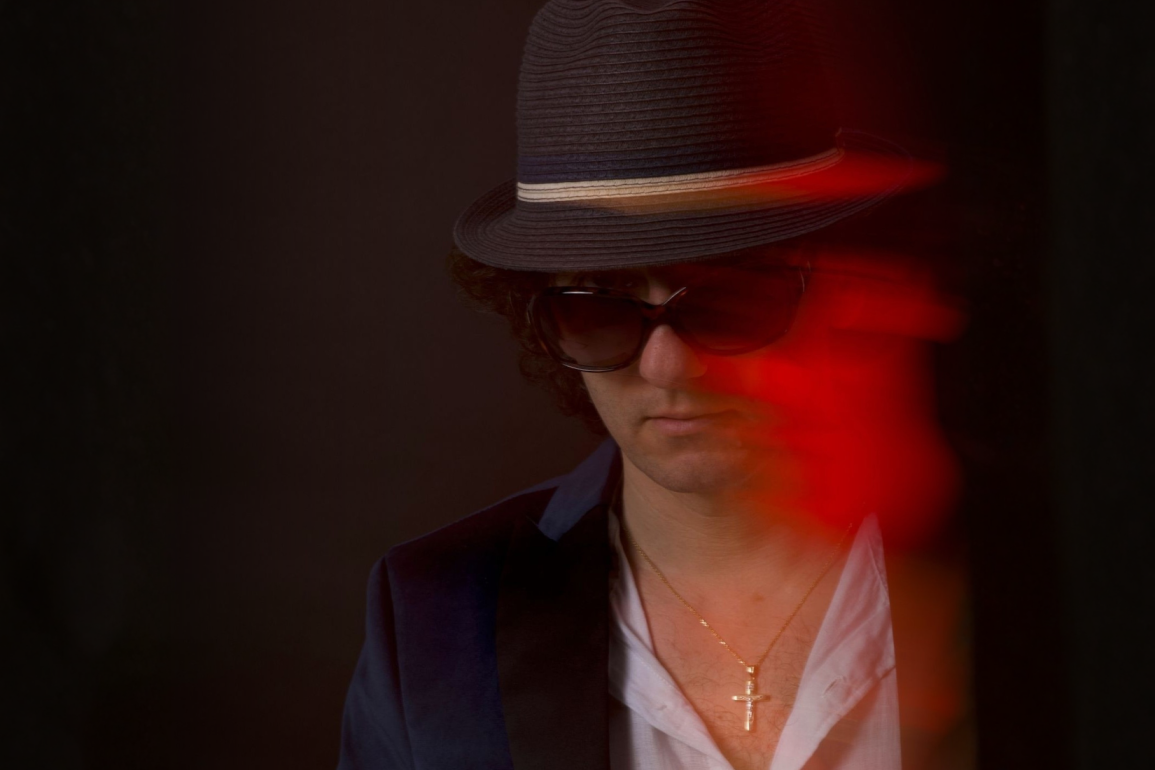
For Moon Rocket, dance music has always been as much about musicianship as it is about the dancefloor. The alias of Italian producer, DJ and classically trained multi-instrumentalist Raffaele Scoccia, Moon Rocket has carved out a distinctive space within the Afro House landscape, bringing the piano and Hammond organ into a sound defined by melody, emotion and groove.
With releases spanning Defected, Nervous, Sony Italy, BBE, Hed Kandi, and Soulfuric, alongside support from tastemakers including Black Coffee, Seth Troxler, and Pete Tong, his trajectory reflects a commitment to musicality that runs deeper than the club. We caught up with him to discuss his classical beginnings, the role of live instrumentation in electronic music, his evolving Afro Melodic-Tech sound, and the ideas that continue to shape his work.
Paint us a picture: what sparked your passion for the arts in the first place? Was there a single moment or experience that solidified your decision to pursue this path?
When I started studying piano at a very young age, I discovered that music was something that came naturally to me. As I grew up, I became passionate about many different genres and gradually began exploring how they could coexist. Over time, I found a way to bring together my classical piano background with electronic music, which eventually led me toward the distinctive sound I have today, rooted in Afro House. There wasn’t really a single moment when I decided to pursue this career. It has been a journey that developed naturally over the years, through curiosity, experimentation, and the experiences I’ve had along the way.
When you create, what leads the way – a feeling, a story, or the sound itself?
It really depends on the moment. Sometimes a feeling comes first, sometimes it’s the sound itself, and other times a story or an experience can spark the idea. I think all three can play a role, depending on where I am emotionally and creatively at that particular time.
What’s in your toolkit? Share the gear, gadgets, or software you can’t create without.
My Nord Electro keyboard, my Novation Bass Station, my Moog, and, of course, my real upright piano are some of the essential pieces in my toolkit. I use many other plugin instruments and tools as well, but I’m especially drawn to anything that gives me a sense of immediacy and a real live feeling. As a musician, I love the imperfections, physicality, and energy that come from playing real instruments, and I always try to bring that feeling into my music.
What’s your go-to ritual or trick for getting into the creative zone?
My go-to ritual is quite simple: listening to some great music while enjoying a good coffee. It helps me slow down, get into the right mood, and let the creative ideas start flowing naturally.
What’s the one item you always keep within arm’s reach while creating or performing?
Without a doubt, my upright piano. It’s the instrument I always want within arm’s reach when I’m creating or performing. And when the piano isn’t available, my keyboard is the next best thing, it allows me to keep that same connection to the music wherever I am.
How did you ultimately end up defining your sound?
I would say my sound is a blend of my classical roots as a pianist and my passion for electronic music. My background in classical music has always influenced the way I approach melody and harmony, while experimenting with electronic elements opened up a completely different world of sound and rhythm. Over time, these two sides naturally came together and led me to find my own comfortable space within the Afro House and Melodic Tech style.
How has your creative process or perspective shifted since you started your journey?
I think it naturally changes with time, with the places you live, and with the experiences you go through. Today, I feel much more focused, minimalist, and mature in the way I approach music. I see that as a very positive shift because the more experience I gain, the more I understand what is truly essential. I’m increasingly interested in reaching a kind of synthesis, saying more with less, which I believe is one of the most difficult and rewarding things to achieve in music composition.
Walk us through a recording session: what’s the most memorable moment you’ve had in the studio?
One of my most memorable studio experiences was during my time in New York. It was an incredibly inspiring period, filled with opportunities to work with talented guitar players, vocalists, and musicians I had first met in clubs and then had the chance to collaborate with in the studio.
I also had the opportunity to work alongside some amazing producers and engineers. Some particularly memorable sessions were with producer Jon Cutler, mixing with David Sussmann, mastering with Dave Kutch, and recording with Bobby D’Ambrosio. I was also fortunate to work with incredible vocalists such as Lisala Beatty and Marlon Saunders to name a few.
What made that period so special was that every session brought something new. Every day felt like a new musical discovery and an opportunity to learn from the people around me.
What are your opinions on generative AI music tools such as Suno? Is it something that aids in the creative process, or takes away from it?
To be honest, I’ve only recently started exploring tools like Suno, so I’m still experimenting with it and trying to understand what it can really offer. I’m definitely an old-school musician at heart. I play piano, and I love creating music that comes from my hands, my experience, and my soul.
For me, AI in music is a very delicate subject. I don’t think I would ever use it to create an entire track, because I feel that doing so could risk losing something very important: your own personality and identity as an artist. At the same time, I can see the value of using AI as a tool for inspiration, experimentation, or to help develop an idea.
Ultimately, I still believe that the creative process should come from a human being and have a human touch. Technology can be a useful tool, but for me, it should support the artist rather than replace the human element behind the music.
Any side projects you’re working on?
As a side project, I’ve recently gone back to where it all started for me: the piano. As I’ve grown older and gained more experience, I’ve felt the need to return to composing piano music and explore this side of my musical identity in a deeper way.
I’ve been writing and composing at the piano since I was very young, but I feel that now is the right moment to dedicate more time to it and eventually share this music publicly. It’s a more mature and intimate side of my artistic expression, separate from my electronic project, but still deeply connected to my roots as a musician. For me, it’s a way of exploring another dimension of my creativity while continuing to develop my electronic work.
What’s the strangest or most surprising song currently on your playlist?
It would have to be “Floe” by Philip Glass, from Glassworks. He’s probably not the composer you would typically expect to find on a playlist connected to this genre, but his music has always been a great source of inspiration for me. I’m very attracted to the repetition, minimalism, and emotional depth in his compositions, and I think those elements can influence the way I approach electronic music in unexpected ways.
Which song, album or playlist do you never get sick of no matter how many times you listen to it?

In this new era, with so much music available at our fingertips through streaming, I don’t tend to get stuck listening to just one thing. I’m always exploring and discovering new music. That said, there are a few records I always come back to.
Daft Punk’s “Discovery” and “Homework” are definitely among them, as well as Radiohead’s “In Rainbows” and Coldplay’s “A Rush of Blood to the Head”. These are staple records for me, albums I can listen to over and over again without ever getting tired of them.
Are there any unexpected hobbies or projects you’re exploring outside of your main work?
Outside of music, I really love skiing. It’s an activity that gives me a chance to disconnect, clear my mind, and recharge. I also find that having that space away from music often helps me come back to it with a fresh perspective.
If your life and career were an album, what would its title be, and what’s the hidden track only you
I’ve never been someone who can stay in one place for too long. I’ve always felt the need to move, explore, and discover new places, and throughout my life I’ve had the opportunity to live in different countries and experience very different environments.
So I think “Running Into the Unknown” would be a fitting title for the album of my life and career. It reflects my curiosity, my constant movement, and my willingness to step into the unknown and see where it takes me.
As for the hidden track, I think it would be something more intimate and unexpected, perhaps a piece that reflects the quieter side of me, away from the electronic world.
Give us a glimpse into the future – what surprises or milestones are coming up for you this year?
Honestly, I don’t really expect surprises, otherwise they wouldn’t be surprises! I try not to make too many long-term plans. I prefer to keep working, stay focused on the music, and see where the journey takes me.
I’m always open to new opportunities, and if something exciting and unexpected comes along, I’ll definitely embrace it. For me, the important thing is to keep creating, keep moving forward, and be ready when the right moment arrives.
Famous last words?
It ain’t over till it’s over.
Follow Moon Rocket on social media:
Instagram | Facebook | Spotify