

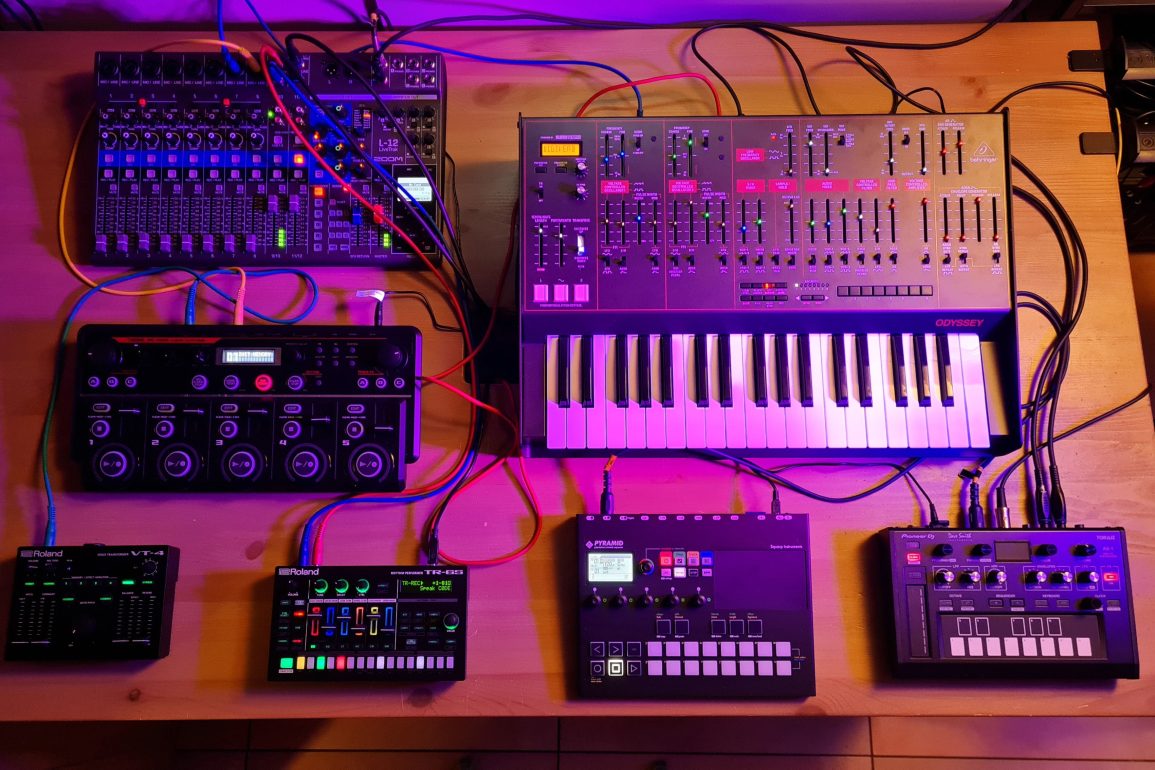
Photo Credit: TStudio
As dance music culture continues to revolve around bigger stages, louder sound systems and increasingly elaborate productions, a quieter alternative is finding its place in contemporary music venues. From intimate synthesiser performances to dedicated listening sessions, ambient music is creating spaces where audiences can slow down, disconnect and experience electronic music differently.
In an era of constant digital stimulation, ambient soundscapes and intimate listening events offer a calm alternative to high-energy clubbing. Rather than focusing on heavy basslines or massive stage shows, these gatherings invite people to simply sit and listen to live synthesisers, modular gear, and field recordings. Available in galleries, listening rooms, and independent venues, these sessions expand electronic music’s reach by fostering collective, focused listening without traditional nightlife pressure.
Beyond the dancefloor
Ambient music has long influenced electronic subgenres, moving beyond passive listening into techno, club music, and experimental sound design. Today, audience engagement is shifting from home headphone listening to gathering in dedicated physical spaces.
These events feature extended synth improvisations or curated ambient, drone, experimental, and downtempo music. Audiences can sit or lie down without pressure to dance or socialize. The format also lets electronic musicians use modular setups, analog gear, loopers, and field recordings to build evolving, real-time sonic environments rather than recreating studio tracks.
A different kind of night out
The rise of these events highlights a shift in nightlife away from scale, visual overload, and massive lineups. Highlighting this trend, a 2026 Mixmag Australia feature covered “murmurations,” an event series founded by designer Elisa Amelia Bausch and organiser Nergal Youkhana. The initiative promotes intentional, focused listening through strict no-phone and no-talking policies, featuring artists like Om Unit, Nicola Cruz, and Irene Ais exploring alternative musical directions. The founders aim to establish non-traditional spaces for music suited outside standard club settings, treating ambient music and deep listening as a shared cultural practice.
A similar movement has emerged in the San Francisco Bay Area across galleries, warehouses, independent spaces, and private venues. Combining live electronic performances with DJ sets, these gatherings let audiences recline and experience music without pressure to dance. Some include communal meals or daytime programming, feeling more like artistic gatherings than traditional club nights. Rather than recreating traditional ambient listening, these events establish new social rituals around sound, demonstrating that community thrives even without a dancefloor.
The return of the chillout room
Creating quiet spaces in electronic music isn’t new. During the late 1980s and 1990s acid house and rave movements, clubs often had dedicated chillout rooms with ambient, downtempo, and experimental music for ravers escaping the main dancefloor. In a 2023 DJ Mag feature, artists noted these rooms disappeared as club culture became commercialised.
Sally Rodgers of A Man Called Adam cited financial pressures for the decline of original chillout rooms, as promoters favoured revenue-generating dancefloors. Yet the concept survives. Modern listening bars and audiophile venues have inherited this ethos, offering spaces for unconventional electronic music outside traditional club settings. Today, these venues are increasingly the main draw rather than mere side rooms, with audiences deliberately choosing events centred entirely on the listening experience.


The appeal of slowing down
Ambient music shifts attention by inviting focused listening rather than the immediate reactions driven by rhythmic electronic genres. Its compositions evolve gradually through texture, repetition, spatial effects, and subtle tonal shifts instead of traditional climaxes. In live settings, artists using modular synths and electronic instruments construct dynamic soundscapes in real time via subtle adjustments in pitch, modulation, and filter—turning performances into shared sonic environments.
Experiencing ambient music in person adds a unique communal dimension compared to solitary headphone listening, uniting listeners in a shared moment. This concept aligns with American composer Pauline Oliveros’s Deep Listening philosophy, which advocates for active awareness of sound and environment. However, live ambient music extends beyond wellness or meditation; it can be challenging, strange, or physically intense through drones and experimental textures. The core appeal lies not in relaxation, but in experiencing music free from traditional dancefloor expectations.
A different future for electronic music events?
This movement highlights a growing desire for diverse electronic music experiences, where ambient gatherings and clubbing complement each other rather than compete. Club artists often hold ambient or downtempo material rarely played in typical sets. Reflecting this shift, festivals are adapting; for example, Lightning in a Bottle 2026 launched the Moon Room—featuring artists like Julianna Barwick—to offer a non-dancefloor alternative to standard programming.
Independent venues can redefine music events beyond stages, DJ booths, or crowds. A room with synthesisers, good acoustics, and attentive listeners suffices. Ambient music offers a new way to engage with the world rather than an escape. In an attention-demanding culture, focusing purely on music is a radical act—making re-learned listening, not silence, the true antidote to overstimulation.