

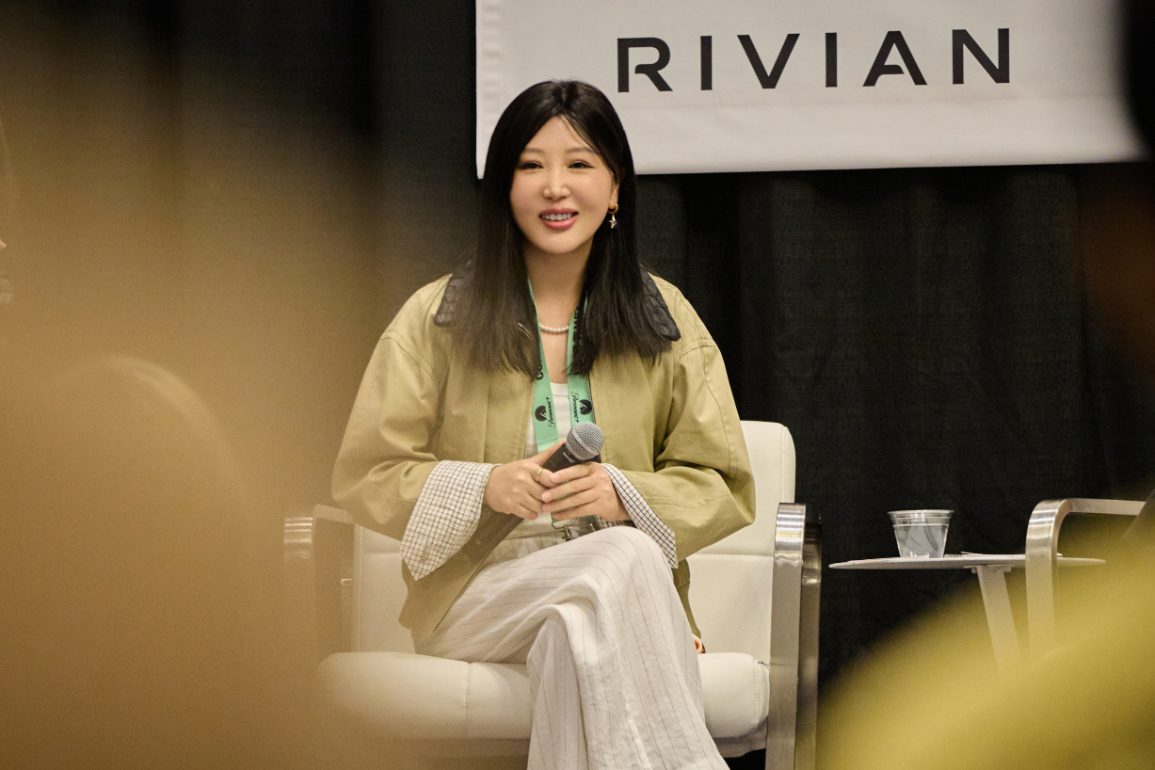
Snow. J is a music industry visionary, who founded one of the most groundbreaking record labels, Cheerful Music. As a serial entrepreneur, Snow. J initially entered the industry as a singer-songwriter. Now, as the CEO and founder of one of the most innovative record labels in the world, Snow. J is actively redefining the Chinese and Western music markets with her cross-border approach. The label is known for viral hits like ‘Yi Xiao Jiang Hu’ which has over 50 billion streams on TikTok alone, while it also boasts a roster of hitmakers including Snow. J, Silk Ye, Daven Wu and Michaelachel. Under her remarkable leadership, Cheerful Music has secured partnerships with Universal Music Publishing Group and Sony Music. Additionally, Cheerful Music recently participated in a panel discussion at SXSW in Austin, Texas on 16 March, discussing the rapid evolution of AI in the music industry and its potential impact on human creativity.
You initially started as a singer-songwriter before becoming the founder of Cheerful Music. How has your artistic background shaped the way you run Cheerful Music?
Because I started out as a singer-songwriter, I have a natural empathy when working with artists. My creative background also gives me a heightened sensitivity to musical aesthetics and market trends. This allows me to better oversee the quality of the music and make more targeted decisions regarding promotional strategies. This dual identity enables me to strike a much better balance between art and commerce. I don’t just evaluate a project from a business perspective; I also approach it from the creative side to determine what is genuinely valuable for the artist.
When you founded Cheerful Music, what gap in the music industry were you hoping to fill?
When we first established Cheerful Music, traditional Chinese-style music didn’t really have a large presence in the market. But because I was a traditional Chinese-style artist myself, I knew first hand how captivating this genre could be, and I saw its massive potential. I was convinced that if we paired ‘premium content’ with ‘precise marketing,’ we could absolutely boost the genre’s popularity and impact. Looking at our roster of smash-hit traditional Chinese-style tracks today, it really proves that my initial instinct was right. It’s also a huge honor for me that Cheerful Music has been able to bring these unique Eastern rhythms to both the domestic and global music scenes.
Cheerful Music operates between London and Shenzhen. How does working across these two very different cultural and industry environments shape your strategy and overall vision?
I believe the emotions conveyed through music are universal. London and Shenzhen represent two very different yet highly complementary cultural environments: Shenzhen stands at the forefront of efficiency and technological innovation, while London is rooted in a deep cultural and artistic heritage.
My strategy is to focus on connection — identifying shared emotional ground across different cultural contexts and transforming differences into a driving force for innovation. This complementary dynamic has also shaped Cheerful Music into a more open and diverse musical ecosystem.

Chinese music is increasingly influencing global pop culture. What do you think the rest of the world still misunderstands about the Chinese music market?
A fairly common phenomenon is that overseas listeners sometimes confuse Chinese music with Japanese or Korean music, for example, mistaking the guzheng for the koto. In reality, many cultural elements found in Japanese and Korean music originally evolved from Chinese culture, which means there are natural points of overlap between these traditions.
Because Chinese music has developed and circulated more slowly in the global market compared to Japanese and Korean music, listeners may instinctively associate certain Chinese works with J-pop or K-pop when they encounter them. This can lead to the misconception that Chinese music is imitative, when in fact it has its own distinct aesthetic and stylistic identity.
As a result, the market sometimes underestimates the originality of Chinese music creators. What is often overlooked internationally is that many Chinese musicians are not only technically accomplished, but also possess a very clear cultural perspective. Their modes of expression simply don’t always align with prevailing global trends or Western audience expectations. Addressing this gap, helping authentic Chinese creative voices be better understood globally without diluting their identity, is precisely one of the core missions we are pursuing at Cheerful Music.
Tracks like ‘Yi Xiao Jiang Hu’ have generated enormous traction on TikTok. Are there any key lessons you’ve learnt about creating music that resonates globally on social media platforms?
The version of a song that goes viral is not always the original release. In the case of ‘Yi Xiao Jiang Hu’, the breakout moment came from a fusion of DJ elements, traditional operatic vocals, and pop influences, which helped create its explosive impact.
This further confirms that while international listeners may not understand the lyrics, rhythm functions as a universal language. When a track’s rhythm can trigger emotional or even physical responses across different cultural backgrounds, it effectively transcends language barriers.
We’ve also observed that different markets respond differently to the same song. As a result, continuously releasing and testing different remix versions allows us to optimize a track for diverse audiences and plays a crucial role in driving its global circulation.
At SXSW you spoke about Cross Cultural AI Trends in Music Production. What are the most exciting ways AI is currently transforming the creative process today and what are the main challenges?
AI has significantly lowered the technical barriers to music creation, allowing more people with ideas, even those without formal production training, to experiment with making music. This democratization of creativity is genuinely exciting.
However, the challenges are equally clear. Music generated by AI often tends to be template-driven and formulaic, which makes it difficult to produce niche, original, and truly high-quality work. Another major challenge which Vivian, MKJ, and I discussed at SXSW, concerns authorship, ownership, and revenue distribution.
As AI becomes more deeply embedded in the creative process, it becomes increasingly important to clearly define and advance copyright frameworks and regulations. These systems must ensure that music created through genuine human input receives fair compensation, proper recognition, and the respect it deserves.

With streaming and social media being such key drivers in artist discovery, how does Cheerful Music balance viral momentum with building long-term careers for artists?


At Cheerful Music, we view viral momentum as an entry point rather than an end goal. Once a track gains traction, we move quickly to build a deeper cultural narrative around the artist. Listeners may follow because of a catchy hook, but they only become long-term fans when they connect with the artist’s values, personality, and sense of presence.
That’s why we encourage artists to actively engage on social media, consistently share positive and authentic personal content, and expand their visibility through formats such as variety shows and music festivals. This integrated approach allows us to convert short-term traffic into long-term, high-engagement fan communities.
How do you see Chinese music companies shaping the global music ecosystem within the next decade?
I honestly don’t think anyone can clearly predict what the next decade will look like. In the AI era, change is happening far too fast to forecast the music industry on a ten-year timeline, new technologies and new content are emerging every single day.
What does the rest of 2026 hold for Cheerful Music?
If you ask what Cheerful Music is focusing on next, I’d say we’re currently using diverse musical rhythms, such as the fusion of electronic music and traditional Chinese elements, as a universal language to break down cultural barriers. We also host international songwriting camps every quarter, inviting artists from different countries to come to China and experience the local music market and cultural environment firsthand.
At the same time, with an overwhelming volume of songs being released on streaming platforms every day, ensuring that listeners actually discover our music has become increasingly critical. This is where Cheerful Music’s strength lies: combining content, algorithms, and social media to consistently create music that can enter the mainstream, while transforming short-term exposure into long-term, high-engagement audiences.
Follow Cheerful Music: