

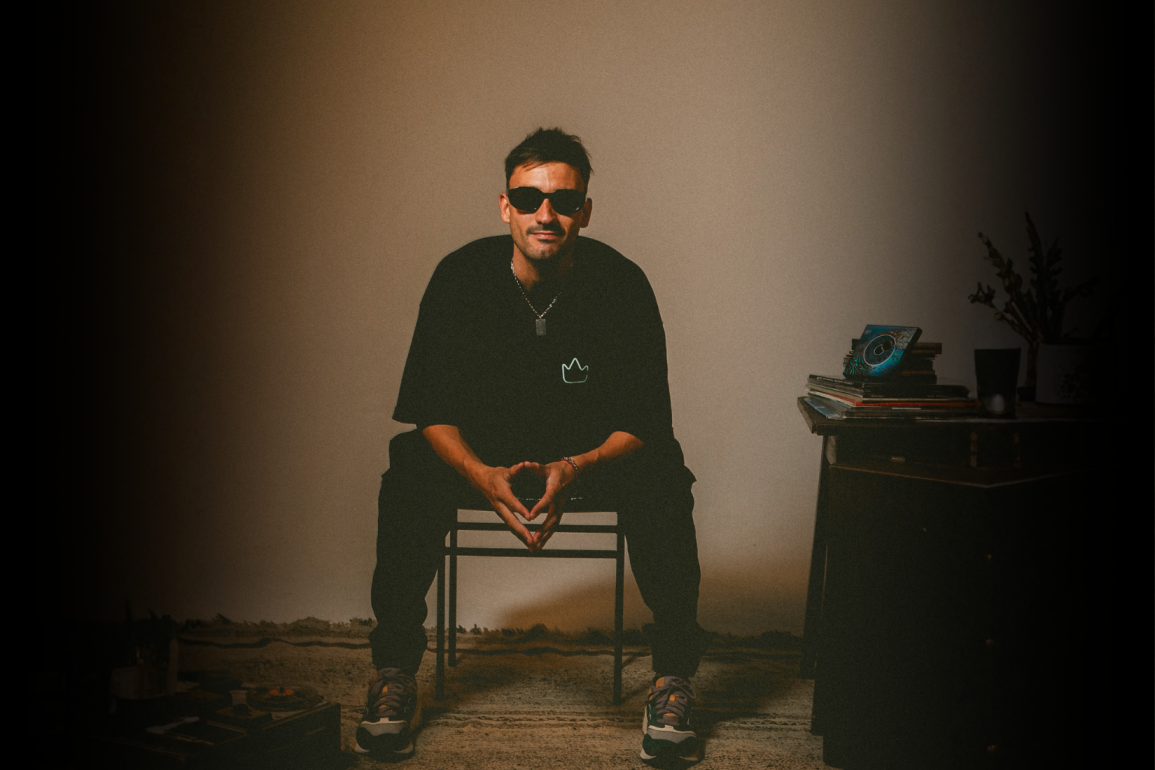
With more than a decade behind the decks, Argentine DJ and producer JFR has built his career around one thing above all else: the dancefloor. From major clubs across Argentina to international stages in Miami, Pakistan and across Europe, his sets have taken him far beyond his home country while maintaining a sound rooted in melodic house, progressive and techno. His productions have found homes on labels including Anjunadeep and All Day I Dream, earning support from artists such as Hernán Cattaneo, Lee Burridge and Nick Warren.
Beyond his work as an artist, JFR has also become an important figure behind the scenes, founding Secret Feelings Records, hosting Secret Feelings Radio since 2018 and working as Label Manager for Musique de Lune and Armoony Records. In this interview, we speak to JFR about his journey through Argentina’s electronic music scene, the art of reading a dancefloor, his evolving sound, and the work that goes into building a lasting community around electronic music.
Listen to JFR’s mix on PLAYY. Music while reading the interview below:
How would you describe your musical style and the genres or subcultures that most influence your sound?
I would describe my sound as Melodic House. My live sets are more progressive and draw from a wide range of influences, including Progressive House, Indie Dance, House, Deep House and Techno. I like to blend these different styles into a dynamic and emotional journey, and I feel that Melodic House is where all these influences naturally come together in my sound.
Music Creation: Describe the primary setting or environment where your music is conceived. Is it a chaotic, overstimulating studio, a minimalist digital space, a rehearsal room, or a more isolated location?
My music is mainly created in an analog-inspired environment, surrounded by vinyl records, cassettes, CDs, synthesizers and books. It’s a space filled with physical references and textures from different eras of music, which helps me stay connected to the history and culture behind the sounds I create. I like having a space that feels personal, warm and organic rather than overly digital or sterile.
When you create, what leads the way – a feeling, a story, or the sound itself?
I don’t really think too much about it when I create. I simply let the sounds come out of my piano and see where they take me. I don’t make music thinking about a specific moment, a particular dancefloor or a certain record label. I just create freely, following the sound and the feeling in the moment. Once the music is there, I step back and discover what style or genre it naturally belongs to. Sometimes I’m almost surprised myself by what I’ve created.
What’s in your toolkit? Share the gear, gadgets, or software you can’t create without.
You can create amazing things with just Ableton Live and a pair of headphones, but I feel much more comfortable when I’m in the studio surrounded by my instruments. My keyboard, synthesizers and guitar are essential parts of my creative process. I like being able to move away from the screen and interact physically with the instruments, letting the music develop naturally.
Are there any unexpected or dream collaborations hidden in your work?
I would love to collaborate with Joris Voorn or Maceo Plex someday. They are both incredible producers with a deep understanding of synthesizers and sound design. Their sound is so clear, pure and original, while still being very musical. I feel I could learn a lot from working with either of them, and I think it would be a very inspiring creative experience.
Any side projects you’re working on?
Besides being a DJ and producer, I’m also the label manager of four record labels, so a big part of my time goes into developing artists, curating releases and building the labels. At the moment, I’m also working on a very exciting and ambitious project connected to labels and artists. I can’t say too much about it yet, but it’s something I’ve been developing for a while and I’ll be sharing more about it very soon.
Who’s an emerging artist you think deserves more recognition right now?
Simon Vuarambon
What role does ‘rebellion’ or ‘counterculture’ play in your music? Are you aiming to challenge commercial norms, sonic structures, or societal expectations?
I’ve never consciously tried to be rebellious or go against the rules. I simply developed a sound that didn’t always fit easily into existing labels or categories, and that eventually led me to create my own label to have a space to release my music freely.

I’m not particularly interested in commercial trends or making music with the intention of fitting into platforms like TikTok. I prefer to create music that feels genuine to me, without thinking about what is currently expected or popular. So, even though rebellion was never the goal, I guess that by simply following my own path, I sometimes end up challenging the norms without really intending to.
Who is one non-musical artist (e.g., fashion designer, visual artist, film director) whose work feels sonically synonymous with your sound?
Wong Kar-wai.
What aspects of your artistry feel most important to you, for example your sound, visuals, storytelling, or live performance style?
Sound
The Future: What is the most exciting and the most terrifying technological development impacting the music industry right now (e.g., AI composition, NFTs, digital distribution models)?
I think technological progress is amazing. The technology itself is not the problem; it’s how we use it and for what purpose. I believe these tools should expand creativity, not replace it or simply be used to generate more content.
How would you describe the live music environments you feel most connected to? For example, are you drawn more to the energy of massive festival stages, the intimacy of underground warehouse parties or DIY venues, or a mix of both?
I feel most connected to intimate club environments. I love having the crowd close to me and feeling their energy while I play. For me, there’s something special about that direct connection between the DJ and the people dancing.
Famous last words?
Love, too, is something you learn