

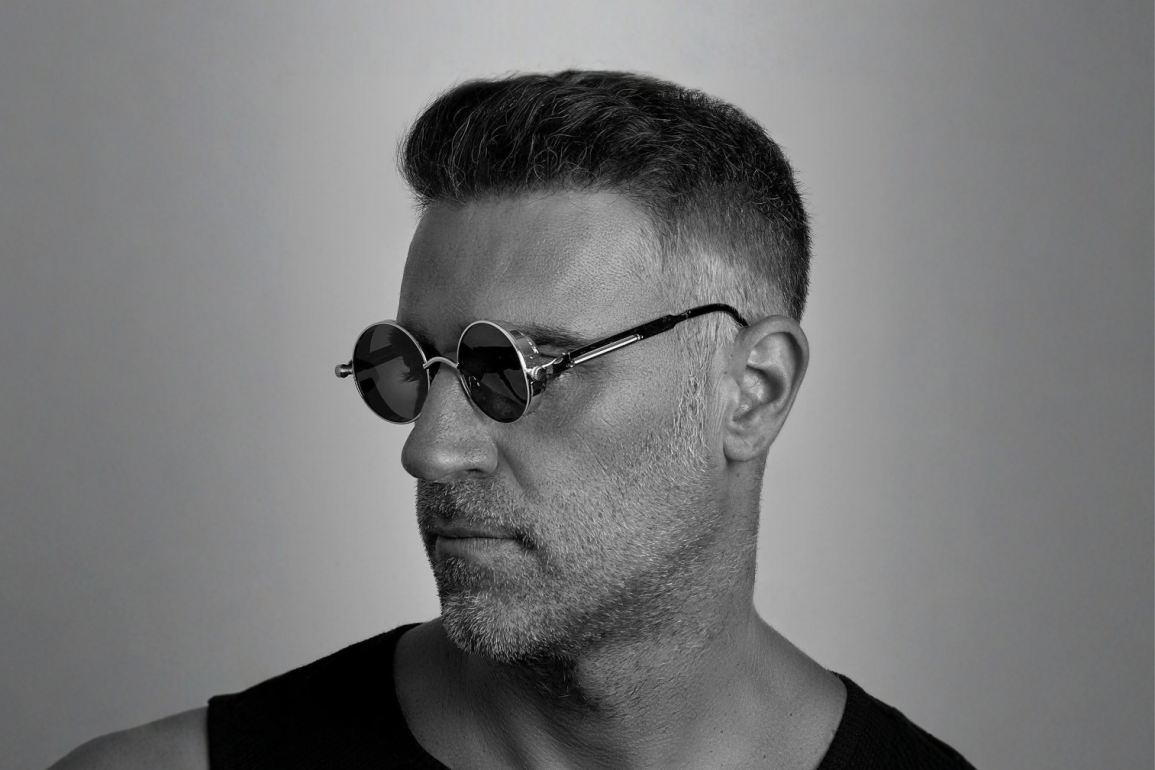
Photo Credit: German Brigante / Instagram
Spanish DJ and producer German Brigante has spent more than a decade carving out a distinctive place within the global house and techno scene. Known for his warm, groove-driven productions and understated approach to dance music, the Ibiza-based artist has released on influential labels including Saved Records, Hot Creations, Crosstown Rebels and Poker Flat, earning support from some of electronic music’s biggest names.
Whether behind the decks at renowned clubs and festivals or in the studio refining his signature sound, Brigante continues to balance timeless house music foundations with a forward-thinking creative vision. We recently had the opportunity to catch up with him.
Listen to German Brigante’s exclusive mix on PLAYY. Music while reading the interview below:
How would you describe your musical style and the genres or subcultures that most influence your sound?
I would describe my sound as a blend of house and electro, with a strong influence from analog sounds and classic electronic music. I enjoy combining deep grooves, distinctive basslines, and emotive melodies while always maintaining the energy needed for the dancefloor.
I’m particularly inspired by the electronic music of the late ’80s and ’90s, the sound of classic drum machines and synthesizers, and the underground scene, which has always been my greatest influence. Although I enjoy exploring different directions and evolving with every release, I always strive to maintain a unique identity and create honest music that truly reflects who I am as an artist.
Music Creation: Describe the primary setting or environment where your music is conceived. Is it a chaotic, overstimulating studio, a minimalist digital space, a rehearsal room, or a more isolated location?
Most of my music is created in my studio, a quiet space where I can disconnect from the outside world and focus entirely on the creative process. I enjoy working in an organized environment, surrounded by synthesizers, drum machines, and analog equipment, while combining them with digital tools to get the best of both worlds.
My studio is a place for experimentation. I spend hours exploring sounds, creating textures, and developing ideas until each track finds its own identity. It’s a space where I can work without rushing and allow creativity to evolve naturally.
When you create, what leads the way – a feeling, a story, or the sound itself?
My creative process is mainly guided by emotions and different states of mind. A particular feeling is often the starting point, and from there I build the music until it expresses exactly what I want to convey.
I also draw a great deal of inspiration from film soundtracks. I’m fascinated by the way music can enhance a scene and evoke powerful emotions without the need for words. I try to bring that same cinematic quality into my productions, creating tracks that not only work on the dancefloor but also connect with listeners on a deeper emotional level.
What’s in your toolkit? Share the gear, gadgets, or software you can’t create without.
I primarily work in Logic Pro X, which is at the heart of my entire creative process. I enjoy combining the flexibility of a digital workflow with the character and personality of classic hardware.
My studio includes instruments such as the Roland TR-808, Roland TR-909, Roland SH-101, Roland Juno-106, Roland MKS-20, Sequential Prophet-6, Moog Minitaur, Novation Bass Station II, Yamaha TX81Z, Korg M1Rx, and a RE-303 for acid basslines.
I don’t use these instruments simply for nostalgia—each one has a unique character that is very difficult to replicate in any other way. For me, blending the organic sound of classic hardware with the possibilities of modern digital production is an essential part of my identity as a producer.
Are there any unexpected or dream collaborations hidden in your work?
I’m always open to collaborating with artists who share a similar vision of music. For me, a great collaboration isn’t about fame, it’s about having a genuine creative connection and the opportunity to create something fresh and meaningful together.
If I could choose a dream collaboration, it would be with Maceo Plex. I’ve always admired his ability to combine depth, emotion, and a truly unique sonic identity. I believe our influences and approaches to music could come together to create something both original and inspiring.
Any side projects you’re working on?
Yes. Alongside my career as an artist, I’m deeply focused on Manitox, my own record label, where I have the freedom to support music I truly believe in and develop projects without creative limitations.
I’m also working on a project with the artist NAEL, exploring new ideas and sounds that complement my work as a producer. It’s a collaboration I’m very excited about, and I hope to share it with the public soon.
Who’s an emerging artist you think deserves more recognition right now?
It’s difficult to choose just one because there’s so much talent out there, but I would say NAEL, Yamil, Thimble, and Zakir. Each of them has a distinct artistic identity and a unique approach to electronic music.
I enjoy supporting artists who bring personality and authenticity rather than simply following trends. I believe all four have the talent, creativity, and vision to go much further, and they deserve far more recognition than they’re currently receiving.
What role does ‘rebellion’ or ‘counterculture’ play in your music? Are you aiming to challenge commercial norms, sonic structures, or societal expectations?
For me, rebellion isn’t about going against something for the sake of it—it’s about staying true to my identity as an artist. I’ve never made music with the intention of following trends or fitting into whatever the market expects at a given moment.


What I really try to challenge is the idea that all music has to sound the same in order to succeed. I prefer to create honestly, explore new sounds when they feel right, and allow each production to develop its own personality. I believe authenticity will always have more value than chasing a passing trend.
Who is one non-musical artist (e.g., fashion designer, visual artist, film director) whose work feels sonically synonymous with your sound?
I would say Ridley Scott. His ability to create immersive worlds, especially in science fiction films like Blade Runner, has always been a major source of inspiration for me. I’m fascinated by the way he combines a futuristic aesthetic with deep emotional storytelling. I try to bring that same philosophy into my music by creating atmospheres that transport the listener and evoke emotions beyond the dancefloor. I want each track to feel like part of its own story or universe, where sound and emotion always go hand in hand.
What aspects of your artistry feel most important to you, for example your sound, visuals, storytelling, or live performance style?
Without a doubt, the most important aspect of my artistry is the sound. I believe great music can communicate emotions and connect with people without the need for explanation. That’s why I dedicate so much time to every detail, from composition and sound design to the final mix.
I also place great importance on my DJ performances. For me, it’s not just about playing great tracks—it’s about reading the crowd and creating a journey that maintains energy and emotion from beginning to end. That connection with the dancefloor is an essential part of my identity as an artist.
The Future: What is the most exciting and the most terrifying technological development impacting the music industry right now (e.g., AI composition, NFTs, digital distribution models)?
Artificial intelligence is both the most exciting and the most concerning technological development in the music industry today. It has the potential to help artists, speed up workflows, and open new creative possibilities.
At the same time, I believe it poses a real risk if it’s used to replace human creativity. It could flood the industry with generated content and make it even harder for artists with a unique voice to stand out. Music is about human emotion and personal experience, and I don’t believe technology should ever replace that. AI should empower creativity, not replace it.
How would you describe the live music environments you feel most connected to? For example, are you drawn more to the energy of massive festival stages, the intimacy of underground warehouse parties or DIY venues, or a mix of both?
I feel comfortable playing both major festivals and intimate clubs, but if there’s one environment I connect with the most, it’s outdoor daytime events. There’s something truly special about watching music interact with natural light, the landscape, and the energy of the crowd.
I love creating soundtracks for those moments, when people are fully present and the music becomes part of the entire experience. Whether it’s a festival or a more intimate event, that connection between the music, the environment, and the audience is what I enjoy most as an artist.
Famous last words?
Music isn’t about following trends, it’s about creating memories and emotions that stand the test of time.