

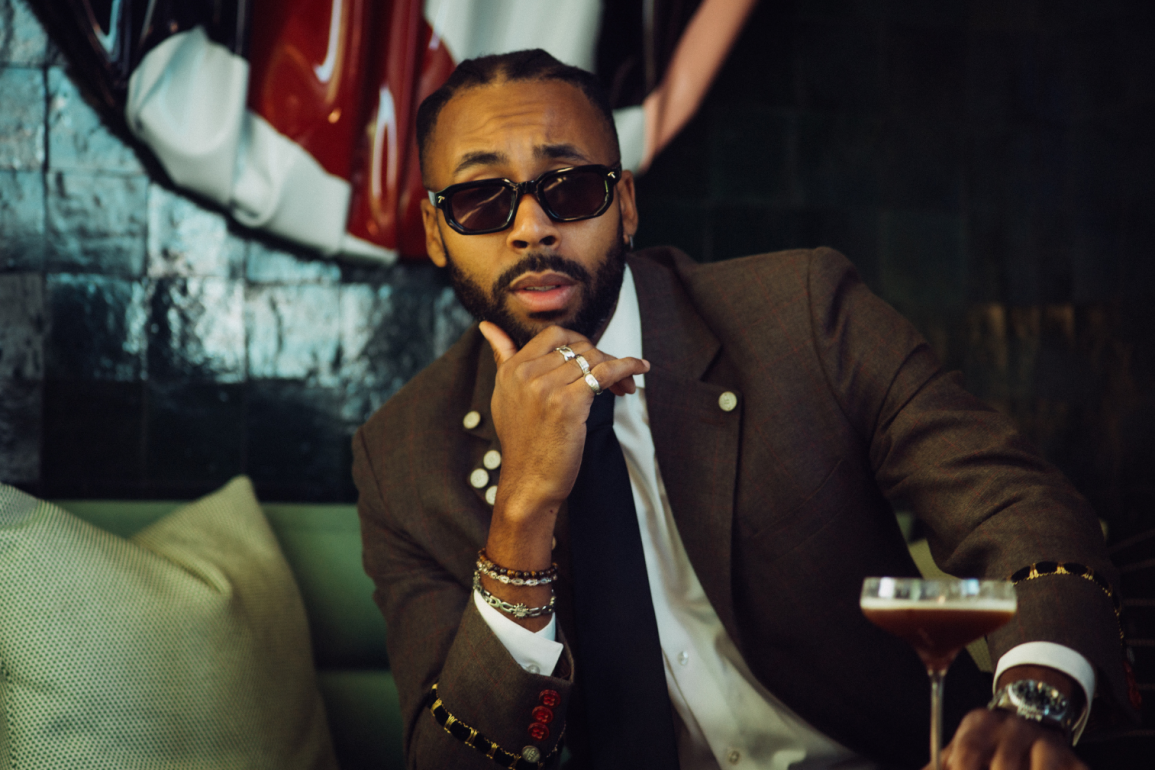
From Baltimore’s warehouse party scene to some of the world’s most respected dance music labels, Life On Planets has carved out a unique lane where soulful songwriting meets infectious club rhythms. Blending elements of hip-hop, R&B, soul and house, the singer-songwriter has built a reputation for his genre-defying productions, captivating hybrid live/DJ performances, and collaborations with labels including No Art, Defected, Soul Clap Records and Classic.
As he continues to bring his signature grooves to dancefloors around the globe, we caught up with him to discuss his creative journey, musical influences, and what keeps his sound constantly evolving.
How would you describe your musical style and the genres or subcultures that most influence your sound?
I orbit around house, r&b, hip-hop and indie dance. My influences are funk, jazz and 90’s classic vocal/deep house.
Music Creation: Describe the primary setting or environment where your music is conceived. Is it a chaotic, overstimulating studio, a minimalist digital space, a rehearsal room, or a more isolated location?
There are many places where inspiration strikes. Sometimes at home in my bedroom studio, other times on planes and trains on the way to gigs. Sometimes during meditation or walks, and a lot of times, inconveniently, in the middle of the dance floor. If you see me talking on the phone in the middle of a party, I’m probably recording some idea for a flow.
When you create, what leads the way – a feeling, a story, or the sound itself?
It’s usually a feeling. That vibe that just sort of whispers in the mind, mysterious and enticing. Sometimes it can be obscure and tough to put into words or even sounds, but that journey of chasing it can be so rewarding.
What’s in your toolkit? Share the gear, gadgets, or software you can’t create without.
I usually write and draw in a number of journals. Sometimes a vibe is better depicted through images. Otherwise, I tend to reach for my guitar or start messing with some drum samples/ my TR-8S first. Get a drum groove goin’ and play out a bassline on either my P-Bass or Bass Station. But I find myself hungry to experiment and try lots of different processes. Every day is an unexpected path.
Are there any unexpected or dream collaborations hidden in your work?
I’ve definitely tried to channel 80s bands like Cameo or the Gap Band. Would be a dream to jam with Bootsy Collins. I’m obsessed with his basslines and have tried many times to emulate what I think he would play when I try to come up with lines. Right now I envision the Beatles, Hendrix, Santana and Bootsy jamming with an 808 and Babatunde Olatunji on percussion.
Any side projects you’re working on?
I think the strange thing about a side project is that it always feels like it could fit somewhere in my major orbit. I’ve been developing some more funky/indie rock stuff that feels like a natural evolution of my sound. Peering into the future, I see horn sections, string arrangements and singers chanting hymns while congas and drummers groove to a non-stop rhythm.
Who’s an emerging artist you think deserves more recognition right now?
There are a number of artists I’m really enjoying watching shine right now, like Soraya, Cor.ece and my boy Errol Bangz. We had a collab drop earlier this year, and his productions are such a refreshing take on the West Coast G Funk sound with house, tech and dance traditions.
What role does ‘rebellion’ or ‘counterculture’ play in your music? Are you aiming to challenge commercial norms, sonic structures, or societal expectations?
I like to subvert the norm and offer an alternative to what’s dominating the stage or the charts. But I’m also emulating the cycle. Hip-house, M.Cing, dancing and expression to house and deeper music was a wave in days past and feels like it’s naturally coming back around.
Who is one non-musical artist (e.g., fashion designer, visual artist, film director) whose work feels sonically synonymous with your sound?
I enjoy the works of fashion designer Zevelyn Jean. Her afro futuristic designs give me what feels like a home for my personal expression and desire for a new kind of connection to my roots.
What aspects of your artistry feel most important to you, for example your sound, visuals, storytelling, or live performance style?


Hard to choose. These days, it can feel fragmented, sound, visual and style, yet the three things inform each other. At the moment, I am pursuing deeper storytelling and seek to bring concept records back to the dance floor.
The Future: What is the most exciting and the most terrifying technological development impacting the music industry right now (e.g., AI composition, NFTs, digital distribution models)?
I’m excited for the ways AI and communication tech can help us to think exponentially faster than ever before. The most terrifying thing is feeling like we have to increasingly open up our private lives to check in with the world and create content. One used to be able to work in the shadow. But now everyone knows how the sausage gets made.
How would you describe the live music environments you feel most connected to? For example, are you drawn more to the energy of massive festival stages, the intimacy of underground warehouse parties or DIY venues, or a mix of both?
Festivals can feel overstimulating and crowded, so it’s nice to play them and vibe with an audience, but for dancing, I love a dark warehouse with enough room to prance.
Famous last words?
May ya’ll find peace, liberation and joy. May the Earth and Sky bless you with their gifts, and may all beings know their true way.
Listen to Life on Planets’ mix on SoundCloud: