

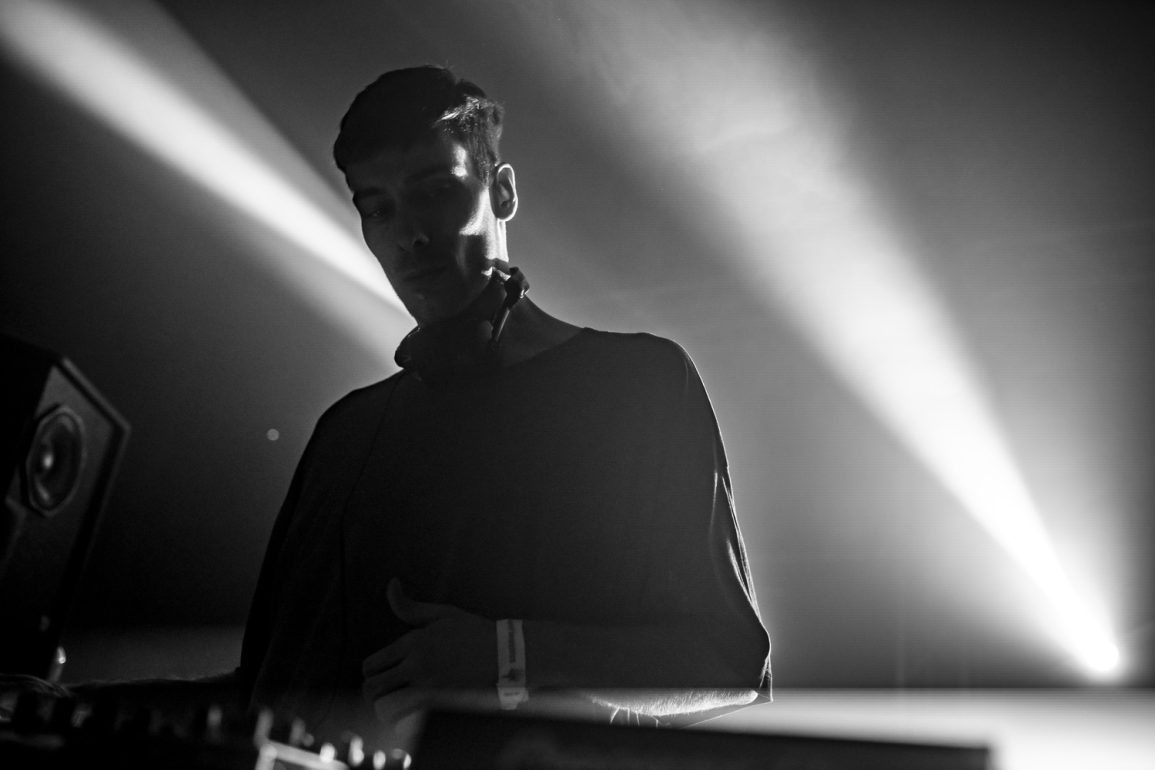
Photo credit: alvarosaavedra
Berlin-based live act, DJ, producer, label founder, and multi-instrumentalist coss has spent more than a decade carving out a distinctive space within the global electronic music scene. Since emerging in 2012, he has amassed a catalogue of more than 300 original productions and remixes, releasing music on acclaimed labels including Bar25, IRR, Dantze, Laut & Luise, Get Physical, Leveldva, Feines Tier, Kanto Records, and Akumandra.
A seasoned international performer, coss has taken his immersive live sets and DJ performances to audiences in more than 30 countries, while also nurturing underground talent through his own imprint family, Metanoia, Mimoton, Betonstrand, and Neongrau. We recently had the opportunity to sit down with him and speak about his career, craft, and hope for the future.
How would you describe your musical style and the genres or subcultures that most influence your sound?
I’ve always seen my musical identity as two sides of the same coin. On one side, there’s my deep connection to downtempo. For me, it’s about creating music that fits almost any situation, as it’s danceable but never overwhelming, and deeply meditative but never sleepy. It’s that perfect middle ground where hypnosis meets groove, allowing people to either lose themselves in thought or just move naturally to the rhythm.
On the other side, I have a massive hunger for pure club energy, where things get much more kinetic and unpredictable. That’s where I dive into everything from abstract, complex house patterns to raw, broken drum and bass beats. I love contrasting that steady, mindful downtempo flow with the chaotic, driving momentum of the dancefloor. Ultimately, both sides come from the same place, driven by a fascination with how different rhythms can shift the energy in a room, whether it’s an intimate afternoon or a peak-time club night.
Music Creation: Describe the primary setting or environment where your music is conceived. Is it a chaotic, overstimulating studio, a minimalist digital space, a rehearsal room, or a more isolated location?
My music is almost exclusively conceived in my studio in Berlin, Kreuzberg. I’m there nearly every day, and the environment thrives heavily on the community around it. It’s a space surrounded by like-minded people and artists from all kinds of different genres who naturally bring in fresh perspectives. That daily exchange and just being in an environment where people are constantly creating is a massive source of inspiration. It keeps the energy alive and naturally pushes my own workflow forward without getting stuck in a bubble.
When you create, what leads the way – a feeling, a story, or the sound itself?
When I create, it is almost exclusively a feeling that leads the way. For me, the entire production process is basically a chase after the perfect soundtrack to the movie playing in my head at that exact moment. I don’t start with a concrete story or just tweak sounds for the sake of it. Instead, I try to capture a specific mood, tension, or emotion, and then build the sonic world around it until the track finally matches that internal imagery.
What’s in your toolkit? Share the gear, gadgets, or software you can’t create without.
My DAW is Ableton, but if I have to name the ultimate game-changer in my studio, it’s not software or a synth. For me, it was the upgrade to proper monitors. A few years ago, I switched from a small pair of Rokits to large Neumann midfield speakers, and that shift triggered a massive, lasting click in my brain.
If you truly want to produce club music, you need a completely transparent sonic image that reproduces the low end exactly how it translates in a club. Before the upgrade, there was a lot of guesswork involved, which usually meant testing a track in the club and then readjusting it at home. Now, that guessing game is gone. Every mix sits right, and the low end hits exactly where it’s supposed to.
Are there any unexpected or dream collaborations hidden in your work?
I don’t really think in terms of distant dream collaborations because I’m currently incredibly happy with the people around me. Right now, I’m doing a lot of stuff with Zettka or Kudamm Jerry. They are having their studio on the same floor as mine, and we share a very similar drive and vibe when it comes to club music. Having that kind of creative chemistry just a few doors down is worth way more to me than any hypothetical dream feature, as we can just bounce ideas back and forth in real time.
Any side projects you’re working on?
I actually put a lot of energy into feeding my different aliases and developing new projects to explore all those different sonic directions. For the faster, more broken side of things, I release drum and bass and breakbeat under saka030. When I want to go down the route of fast, driving techno, I use my ki dake moniker. Right now, I am also heavily working on a brand new project called Haram Boys. It is currently in the middle of production, and I’m really looking forward to getting the first tracks out into the world very soon. On top of that, there is also a lot of unreleased material sitting around from my collaboration with Peter Schumann, which I’m excited about.
Who’s an emerging artist you think deserves more recognition right now?
To be honest, I can’t think of just one specific name right now. Generally speaking, I feel like anyone who is truly dedicated and creates art purely for the sake of art deserves the support. Our current world constantly shows that the people who scream the loudest are the ones getting all the attention. The real, raw talent often gets overlooked because those artists are busy focusing on their craft in the studio instead of playing the social media game. Those are the people who genuinely deserve more recognition.
What role does ‘rebellion’ or ‘counterculture’ play in your music? Are you aiming to challenge commercial norms, sonic structures, or societal expectations?
For me, rebellion isn’t about a loud or forced image. The real counterculture today is simply refusing to play by the rules of the commercial machine. When the entire industry expects you to follow fast-moving trends and create formulas optimized for quick consumption, the ultimate act of rebellion is slowing down, locking yourself in the studio, and spending hours tweaking a mix until the sonic image is absolutely perfect.
My aim is definitely to challenge those commercial norms. I want to create music that needs space to breathe, tracks that are built for a real, deep club experience. Sticking to your artistic integrity and making music purely for the sake of art has become the truest form of counterculture.
Who is one non-musical artist (e.g., fashion designer, visual artist, film director) whose work feels sonically synonymous with your sound?


I’d look toward streetwear and subculture design in general. It’s that specific aesthetic where raw, gritty street culture meets high-end precision. That’s exactly how I view my sound, taking rough, heavy underground energy like deep low ends or broken beats and producing it with an incredibly sharp, high-end studio execution. It’s about that contrast between being rough around the edges but perfectly crafted.
What aspects of your artistry feel most important to you, for example your sound, visuals, storytelling, or live performance style?
For me, sound and visuals combined are what actually create the storytelling. Even when it is limited to cover artworks, abstract clips, or videos, graphic design and music always go hand in hand in my work. I don’t see them as separate things, the visual side gives the music its context and shapes the environment it lives in. It’s about creating a cohesive aesthetic where the sonic image and the visual language completely elevate each other.
The Future: What is the most exciting and the most terrifying technological development impacting the music industry right now (e.g., AI composition, NFTs, digital distribution models)?
The most exciting development is definitely AI. I know a lot of people in the industry are scared of it, but to be honest, I don’t really find any of it terrifying. I choose to see every new technological shift as a chance to grow. Development is naturally a positive thing for me. New tools don’t replace creativity; they just expand what is possible in the studio. It is all about how you adapt and use these advancements to push your own sound forward instead of fighting the change.
How would you describe the live music environments you feel most connected to? For example, are you drawn more to the energy of massive festival stages, the intimacy of underground warehouse parties or DIY venues, or a mix of both?
There is a very clear stance for me on this, I love underground club situations way more than any other setup I get booked for. The experience of a few hundred people coming together exclusively to dance, with no photos, no videos, and without some massive stage elevating the DJ, has something incredibly archaic about it. In those moments, you realize why humans have been dancing around fires for thousands of years. It’s that pure, raw connection to the rhythm and the room that you just can’t replicate on a massive festival stage.
Famous last words?
Hold my beer.
Listen to coss’ exclusive mix here: