

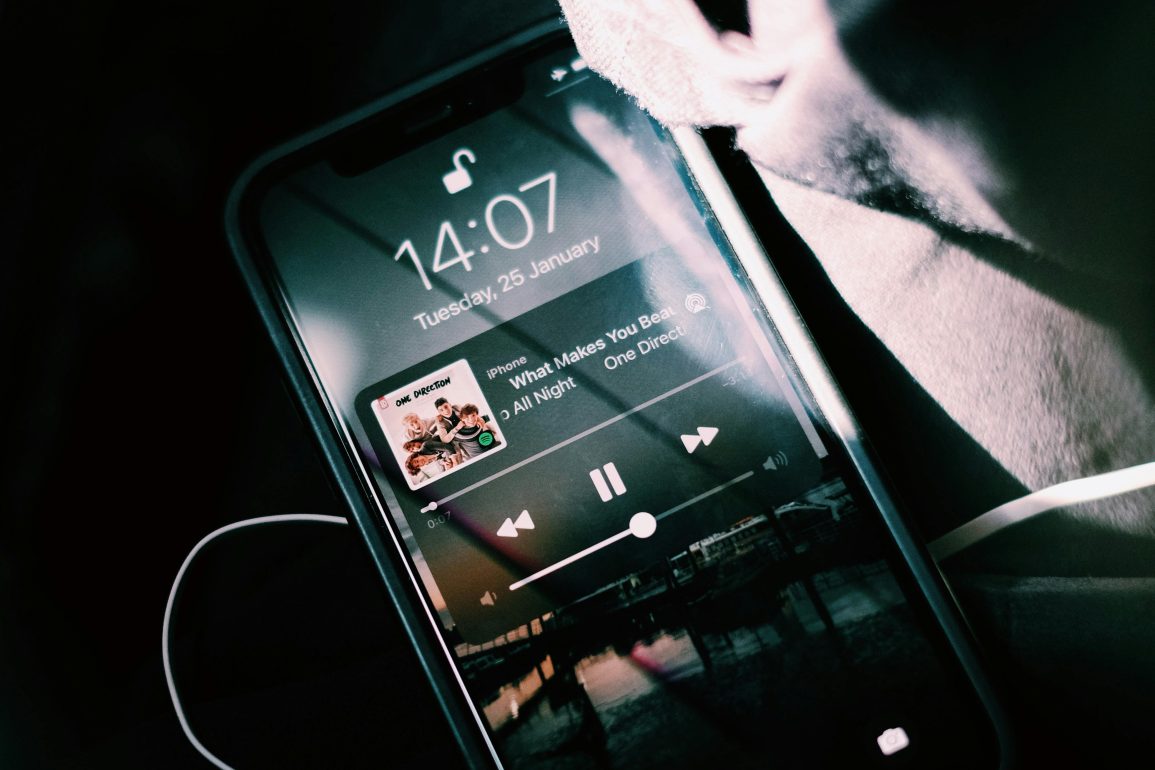
Photo by Pew Nguyen
Music streaming platforms are now home to a staggering 253 million tracks, according to Luminate’s 2025 Year-End Music Report. That figure, reached at the close of last year, marks an increase of 37.9 million tracks year-on-year, averaging around 106,000 uploads every single day.
The scale is dizzying, but popularity is another story. Almost half of all tracks on streaming services attracted fewer than ten plays in 2025, while 88% failed to surpass 1,000 streams for the entire year. The promise of “1,000 songs in your pocket” has quietly morphed into a quarter-billion, most of them unheard.
As AI-generated music continues to flood platforms, the industry is openly questioning how sustainable this growth really is. Universal Music Group CEO Sir Lucian Grainge addressed the issue head-on in his 2026 New Year memo, warning against “the exponential growth of AI slop on streaming platforms,” and calling it a disservice to artists and songwriters.
The warning is grounded in reality. In 2025, Spotify removed more than 75 million “spammy” tracks, while Deezer reported receiving 50,000 fully AI-generated uploads per day by November 2025, making up over a third of all daily submissions.
These pressures have accelerated the shift toward so-called “artist-centric” payment models. Spotify now requires tracks to hit at least 1,000 streams per year to qualify for royalties, while Deezer, in partnership with Universal and Warner, boosts payouts for artists reaching specific listener and play thresholds. Grainge has credited these moves with curbing the rise of irrelevant and automated uploads, though critics argue they risk disadvantaging emerging artists.
Perhaps most telling is where the music is coming from. Luminate reports that major labels accounted for just 3.8% of all uploads in 2025, with a striking 96.2% delivered by independent and DIY distributors, a figure many link to AI tools and automated release pipelines.


Despite the flood, listening remains heavily concentrated. Just 0.2% of available tracks accounted for nearly half of all global streams last year, underlining a widening gap between what exists and what is actually heard.
As platforms edge toward a future that could plausibly host a billion tracks, the question is no longer how much music we can upload, but how much meaning, value, and visibility can realistically survive the noise.