

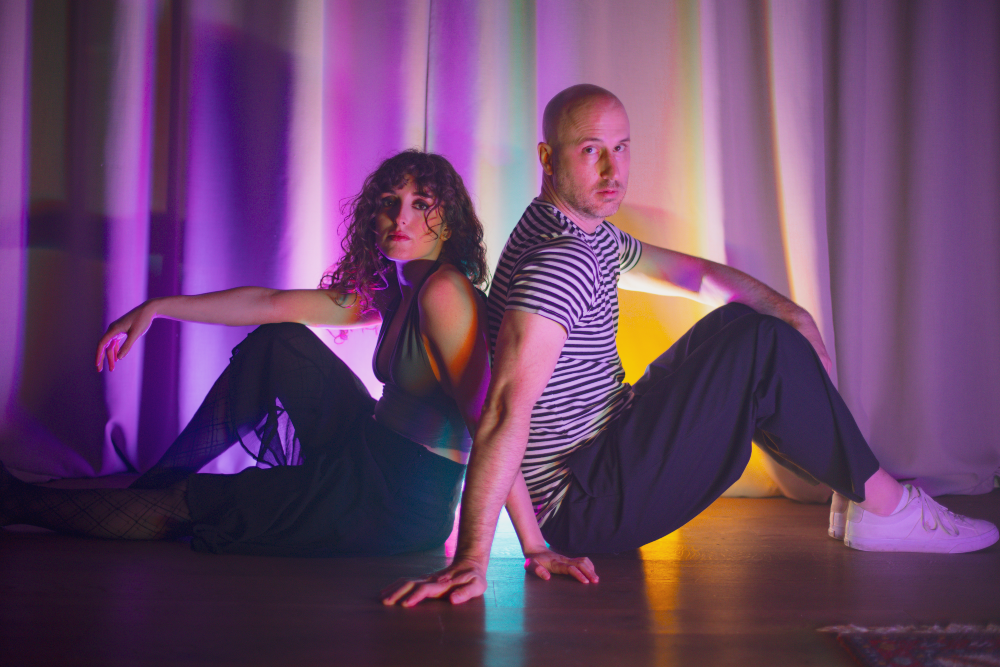
Meet Out Run – the Italo-American duo formed in Florence in 2022 by singer-songwriter Ginevra Abbarchini and producer Lawrence Fancelli, who blend the emotional charge of ‘80s synth-pop with a sleek, modern touch that feels both cinematic and deeply personal. After meeting in Italy’s creative underground, the pair teamed up with longtime collaborator Niccolò Messeri, whose co-production has been key in shaping their polished yet raw sound. Their latest single ‘D’Istanti’, a bilingual ballad gliding between Italian and English, captures the ache of long-distance love, wrapped in shimmering synths and fragile melodies. Following the momentum of previous releases like ‘Dying To Know’ and debut track ‘Meet Me On The Road’, Out Run continues to craft a sound that’s melancholic, minimal, and unmistakably theirs. With a debut EP on the way and a live show in the works, the project is steadily emerging as one of the most distinctive voices in the indie-electronic scene.
Listen to ‘D’Istanti’ and read our exclusive interview with the duo below:
Paint us a picture: what sparked your passion for the arts in the first place? Was there a single moment or experience that solidified your decision to pursue this path?
Ginevra: I was always writing and singing since I was a kid. I was always the one taking photos of my friends performing or at rehearsal. Sure, time to time I would make music with some friends but just out of pure fun. It felt like too big of a dream for it to ever be real.
Lawrence: I’ve been playing and making music since I was a kid, but I never considered a career in music until I had that moment where I knew that’s exactly what I wanted. I was a teenager and it was the first time I had booked a rehearsal room with my band and the atmosphere in there was just so magical to me, I didn’t want to do anything else. One day, our worlds collided, and that was the beginning of Out Run.
When you create, what leads the way – a feeling, a story, or the sound itself?
A feeling always comes first. Sometimes it’s not even clear what that feeling is. From there, we build the sound that mirrors it, and the story follows, sometimes at the very end. The emotion dictates everything.
What’s in your toolkit? Share the gear, gadgets, or software you can’t create without.
We write and produce mainly in Ableton Live and Logic, then mix in Protools. We rely on analog synths like the Juno-60, Prophet 6, and also digital synths and textures layered in post. Vocals are usually recorded on a vintage Neumann M367, and sometimes a simple voice memo makes it onto the final track. Our co-producer Niccolò contributes his own palette of production tools, adding another layer of depth and the more danceable beats you hear on some songs.
What’s your go-to ritual or trick for getting into the creative zone?
It can vary, we don’t force the process; we wait for the right emotional window to open. Usually we have to be together though, even if we’re just in front of a keyboard or listening to music, something new usually comes out of it.
What’s the one item you always keep within arm’s reach while creating or performing?
Anything you can use to record an idea or to write it down usually does the trick. A keyboard is usually always present to help lay down a new idea and develop it. It’s also always present during our performances.
How did you ultimately end up defining your sound?
Knowing when not to fill a space, when to leave silence in. The blend of minimal electronic synthwave-inspired elements and cinematic emotion shaped everything.
Lawrence: also, Ginevra’s voice is probably the most defining element and she always seems to have an endless supply of catchy melodies we can tap into.
How has your creative process or perspective shifted since you started your journey?
Not as scared to experiment.
Even our bilingual identity—switching between English and Italian—has become a strength, especially in songs like ‘D’Istanti’. We’ve learned that authenticity resonates more than perfection.
‘D’Istanti’ weaves between English and Italian. Was there a moment in the writing process when you knew it had to be bilingual, and how do you decide which language carries which emotion in a song?
From the start, we knew ‘D’Istanti’ had to be bilingual—it reflects who we are. Italian brings emotional depth and nostalgia, while English adds clarity and immediacy. We let the feeling guide the language; some emotions just speak louder in one than the other.
Walk us through a recording session: what’s the most memorable moment you’ve had in the studio?
Since we mostly program the drums, our recording sessions are either vocal sessions or synth sessions. The latter usually occur during production when we decide we need some analog synths, so we just plug one of Lawrence’s synths in and start messing around until we hit a sound and chord progression we love. Ginevra’s vocal sessions are different because usually the production is done and the lyrics are written by then. So we just have her run through the song as many times as she feels right, then we do some vocal comping and record harmonies. Lawrence runs those sessions because Nic doesn’t have the patience.
The production on ‘D’Istanti’ feels stripped back in places, almost minimal. How intentional was that restraint, and what challenges did you face in keeping the arrangement spacious without losing emotional impact?
The minimalism was very intentional. The song is about distance and fragility, so we wanted space for those feelings to resonate. The challenge was keeping it emotionally rich without adding too much—but sometimes, silence says more than sound.
Are there any unexpected or dream collaborations hidden in your work?
We’re always inspired by visual artists and filmmakers. We’d love to score a film, a series or create immersive visual installations around our music.
Any side projects you’re working on?
Lawrence has a side project called Mouth Water and Ginevra has collaborated on Bicycle Film Festival.
Who’s an emerging artist you think deserves more recognition right now?
Us 😉

What’s the strangest or most surprising song currently on your playlist?
Lawrence: Right now I’m kind of obsessed by a little known artist who lives in LA called Erez who has a haunting song out called ‘Modern Dream’.
Which song, album or playlist do you never get sick of no matter how many times you listen to it?
Ginevra: Beach House – ‘Depression Cherry’. That album is like a soft room we always want to return to. It’s endlessly comforting and melancholic.
Are there any unexpected hobbies or projects you’re exploring outside of your main work?
Ginevra: It’s always been music, drawing and photography.
Lawrence: I like sports: mountain biking and skiing mostly.
If your life and career were an album, what would its title be, and what’s the hidden track only your fans would know?
The album would be called Moments We Never Lived, and the hidden track would be a voice memo—ambient street noise, one lyric sung softly into a phone, recorded at 3am in Florence.
Give us a glimpse into the future – what surprises or milestones are coming up for you this year?
We’re finalizing our debut EP. We’re also preparing for our first live shows, with plans to bring this universe on the road through a small tour later this year. Our goal is to craft performances that feel just as immersive and intimate as the songs themselves.
Famous last words?
We live in fragments. We write to make them whole.
Follow Out Run:
Spotify – Facebook – Instagram