


Florenzo Hiäät has never been interested in fitting neatly into a box. Somewhere between Trance, Techno and Dance, his sound is shaped by melodic and pop influences, nostalgic vocals and a deep appreciation for the music that surrounded him growing up.
Artists including Depeche Mode, Moby, Sandra, Duran Duran, Madonna and Kylie Minogue helped shape his musical taste, with that sense of nostalgia continuing to find its way into his productions; whether the track is moving at 130 BPM or 150 BPM.
His approach to creativity is equally deliberate. Minimalism provides the starting point, with isolated spaces and natural surroundings offering the ideal environment for developing an idea. From there, sounds evolve into feelings, feelings become stories, and those stories eventually become the message behind a track.
Beyond his own productions, Florenzo is also building the wider creative world of Portääl, exploring everything from artist development and events to Generative Intelligent 3D and AI-assisted creative tools. His philosophy remains centred on experimentation, identity and refusing to let predictability dictate the outcome.
We caught up with Florenzo Hiäät to discuss his genre-fluid sound, creative process, dream collaborations, underground culture, rebellion, AI and the ideas shaping his next chapter.
How would you describe your musical style and the genres or subcultures that most influence your sound?
I often like to ask this question to others as I don’t believe I fit into one box, but I would say somewhere in between the Trance, Techno and Dance worlds, with heavy shading of melodic and pop/nostalgic vocals.
I grew up listening to Depeche Mode, Moby, Sandra, Duran Duran, Madonna, Kylie Minogue and similar artists, so naturally speaking, these icons have shaped my music taste and knowledge in a way that it often reflects what comes out after a studio session.
I love to give my listeners that bit of nostalgia I always aim to reflect in my music, whether it’s a 130 BPM or a 150 BPM track.
Describe the primary setting or environment where your music is conceived. Is it a chaotic, overstimulating studio, a minimalist digital space, a rehearsal room, or a more isolated location?
I try to always have a minimalist approach whenever I sit down and create my first stems. I believe being in an isolated space, ideally with a view of nature, is always my favourite kind of stimulation when approaching the creation of a track.
Keep it easy at the beginning and then go complex, if you want, when it feels right.
When you create, what leads the way – a feeling, a story, or the sound itself?
I often get inspired by the depth of a sound first when loading up a synth. Then I like to carve it out further, to reach a feeling that then blends with a steady workflow when creating other sounds that match it.
The end of the track often resembles the story of that feeling, which then evolves into the message.
What’s in your toolkit? Share the gear, gadgets, or software you can’t create without.
In the music production realm, I am experimenting a lot with Diva from u-he and Pigments from Arturia, alongside Exhale from Output lately, with Serum of course, like everybody else.
In terms of gear in the booth, I always like to keep it simple with a classic A-9/DJM900 or a V10, of course with three CDJs.
Less is more for me.
Are there any unexpected or dream collaborations hidden in your work?
Our ‘Dangerous’ EP coming out last Friday with Bertie might have been a surprise to some, as we have often produced music together, but this marks our first collaboration being officially released through my dear friend Jack’s label MJA.
It’s a pleasure to be on the label, given the fact we have lots of similarities in terms of music approach and identity within the Techno sphere.
Some other hidden collaborations are definitely in the pipeline, both with other Portääl upcoming artists and others from Drumcode and Armada. Can’t say more than that unfortunately.
Are there any side projects you’re working on?
Generative Intelligent 3D is another project that, ever since starting my own music organisation, was always meant to be included within Portääl and beyond: to provide others with out-of-the-box creative solutions and interesting approaches with other technological avenues.
We have the luck, opportunity and the big risk to live through an extraordinary period of an AI-booming era, both from a financial and creative perspective. It’s a double-edged sword which I believe is necessary to handle extremely carefully.
But to me, it has been a very helpful resource to further transcend a unique identity to the brand and to the artists I welcome onboard.
Who’s an emerging artist you think deserves more recognition right now?
Hard to say one, but I have to give a lot of credit to some of the artists and friends I featured on my Portääl shows, such as Earl The Kid and Simone Zino. They have incredible music production skills coupled with great charisma in the DJ booth, naturally being in the game for quite a few years.
Two others outside of the Portääl realm have to be Pagan and Trance Mums, who are dishing out some really awesome tunes as well.
What role does ‘rebellion’ or ‘counterculture’ play in your music? Are you aiming to challenge commercial norms, sonic structures, or societal expectations?
I’ve come to think the rebellion isn’t really against an industry, it’s against tidiness and predictability, against the assumption that a piece of music owes the listener a clean resolution.
Commercial and societal expectations always find themselves intrinsically linked with a drop that fits neatly into an imaginary advert in your mind; I’d rather build something that stays true to myself regardless of external pressure or fitting a puzzle.
Who is one non-musical artist whose work feels sonically synonymous with your sound?
Definitely Pharrell Williams, but for a different reason than people might expect.
It’s not the pop instinct I connect with, it’s the range; someone equally comfortable in a minimal, almost skeletal arrangement as in something maximalist and layered, and never precious about which mode he’s in.
I think that range, that refusal to be loyal to one register, is something I’m chasing in my own sets: minimal and maximal within the same hour, without it feeling like two different artists.
What aspects of your artistry feel most important to you, such as your sound, visuals, storytelling, or live performance style?
I’d say all three of them have to coexist in the same equation well in order to keep people engaged and satisfied in current times in 2026.
As much as I’d love to make music or events for myself, the perfect mix within the three has to always come into the picture when imagining a story.
What is the most exciting and the most concerning technological development impacting the music industry right now?
What excites me is using AI-assisted sound design as a way of generating raw material quickly — not a finished idea, but a large number of strange textural starting points in the time it used to take so much time.
Used that way, it’s closer to a sketchbook than a song, and it hasn’t changed what I think a track is; it’s changed how fast I can get to the interesting version of a bad idea.
What concerns me sits further down the same road, and it’s no longer hypothetical. We’ve reached the point where fully synthetic tracks, no producer, no performer, sometimes no disclosed human involvement at all, are showing up on real charts, not as a novelty but as a routine occurrence.
There are now entire chart systems built specifically to track AI output, because the volume has become too large to ignore or absorb into the normal conversation. That tells you something about scale, not just about capability.
And another problem is what happens to an audience’s listening habits once that becomes normal: a slow erosion of the instinct to ask whose hands were actually on the desk.
Craft has always survived changes in tools. What I’m less sure survives is curiosity. A culture that stops caring where something came from stops asking the question that makes craft matter in the first place.
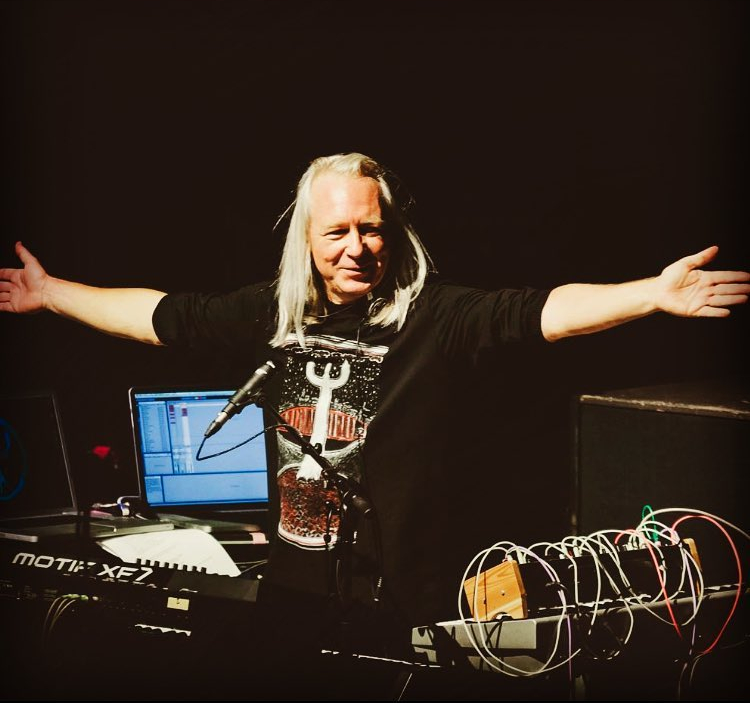

How would you describe the live music environments you feel most connected to? Are you drawn more to massive festival stages, underground warehouse parties and DIY venues, or a mix of both?
At the current minute, as I am today, underground. And I’ve thought about why more than the answer probably warrants.
I spent a lot of my teenage years in places like Fabric, and there’s something magical about these beautiful realities packing 500–700 people into a proper Funktion-One sound system.
There’s no script, no guaranteed outcome, and that uncertainty is doing real work: it’s what keeps the room paying attention rather than simply consuming.
I don’t dismiss the large-scale version of this. There’s something genuinely moving about several thousand people locking into the same kick drum at once; it is its own kind of communion, and I’d be lying if I said it left me unmoved.
But I think what I’m actually loyal to isn’t the size of the room, it’s the presence of risk within it. The rooms I trust most are the ones where something could still go wrong.
Famous last words?
Thanks for having me and Ciao guys!
Listen to Florenzo Hiäät on PLAYY. Music
Follow Florenzo Hiäät:
SoundCloud – Spotify – Instagram – YouTube – Facebook