

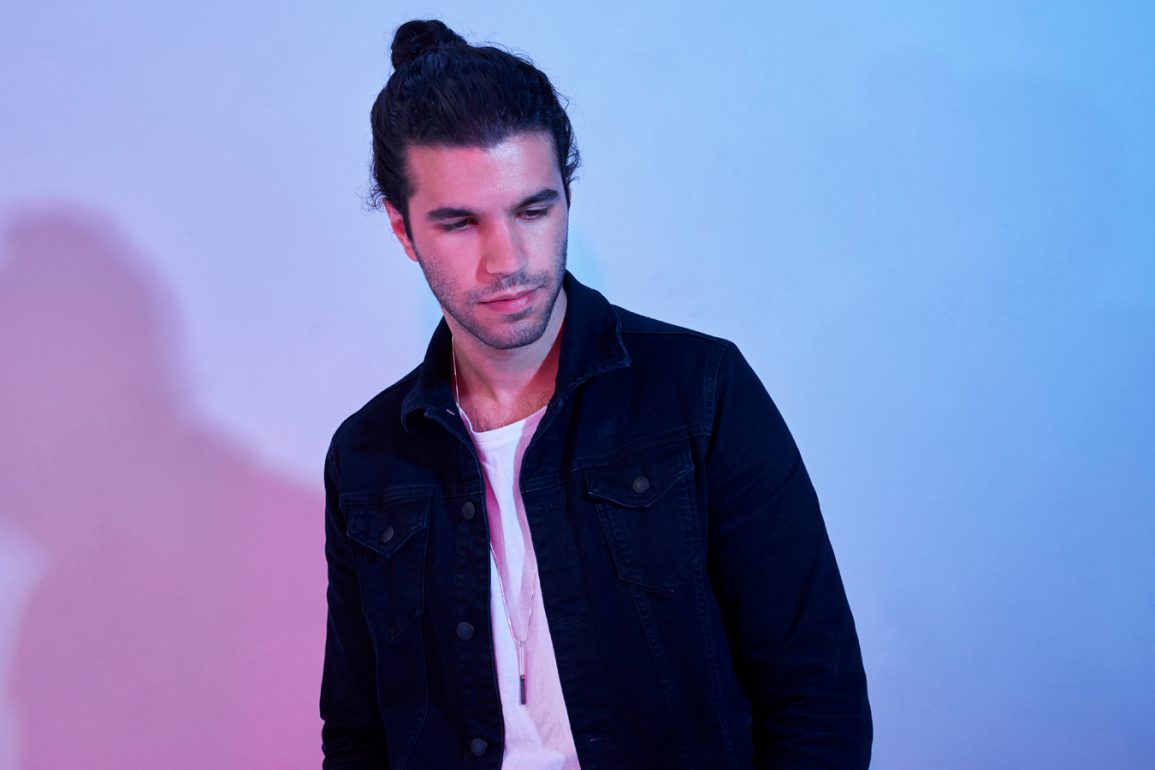
Born Arash Fahmi, Swedish producer and DJ Alfons has built his identity around a fiercely unique approach to music and a wholehearted commitment to creativity. Hailing from Stockholm, Alfons has developed a sound that refuses to sit comfortably inside one genre, instead following instinct, emotion and whatever feels alive in the moment.
His music has also found a substantial audience. Drawing inspiration from Jamaican culture, “Ganjaman” became Alfons’ biggest track to date, amassing over 240 million plays across YouTube and Spotify, reaching No. 1 in Sweden and entering the Top 10 across Poland and the Nordic countries.
Away from the studio, Alfons brings that same intensity to his live performances. Although he generally DJs during his sets, he sometimes takes the microphone when the energy of the crowd feels right, performing some of his songs live. The result is a high-tempo, powerful experience built around physical energy and connection.
We caught up with Alfons to discuss creativity, genre, playlist culture, rebellion, AI and why staying true to yourself may matter more than ever.
How would you describe your musical style and the genres or subcultures that most influence your sound?
I’ve never been very good at behaving inside one genre. Genres are useful until they become handcuffs. I see them more like emotions: you don’t wake up feeling exactly the same every day, so why should every record sound the same?
I follow whatever feels alive in the moment rather than trying to make music that fits neatly into a box—or worse, a generic shitty playlist.
Describe the primary setting or environment where your music is conceived. Is it a chaotic, overstimulating studio, a minimalist digital space, a rehearsal room, or a more isolated location?
Some of my favourite ideas begin outside, with nothing more glamorous than a regular pair of headphones. Being away from the studio gets me out of my own head. Then I bring the idea back indoors, where the studio becomes the place to turn the instinct into an actual record.
Everything from a plant to a cool industrial building can make my head spin.
When you create, what leads the way – a feeling, a story, or the sound itself?
Hmmm, it’s not tangible. Again, no brain process in the way I view it, even if it’s the core source, of course. It’s more the energy and emotion I sit with in that particular second.
What’s in your toolkit? Share the gear, gadgets, or software you can’t create without.
A pair of headphones, a studio, and enough freedom to start before the idea has had time to talk itself out of existing.
I’m not overly romantic about gear; the most important tool is still noticing when something makes you feel something. Honestly, I love working with Logic and its basic core plugins. The more plugins, the more confused I get.
Are there any unexpected or dream collaborations hidden in your work?
I’m more interested in the collision than the name on the poster. The best collaborations are the ones you couldn’t have planned—when two worlds that should not obviously fit together suddenly make total sense.
I remember when I met this random Jamaican in my old basement studio, and we ended up making some SICK shit, but then he just disappeared, haha.
THAT being said, I would love to work with someone outside of my genre, like Young Lean. But within EDM I would say Swedish House Mafia. They are actually groundbreaking, which I feel a lot of my previous heroes have lost. The others have given in to this new playlistification of music.
Are there any side projects you’re working on?
Alfons is one part of a wider universe for me. But what I love to do is basically to be creative and to create.
One of my best friends constantly reminds me of that, and it’s so true. I’m as happy as I can be when I’m creative and creating—whatever it is. I’m writing a children’s book at the moment, for example.
Who’s an emerging artist you think deserves more recognition right now?
Kronan. I really love what is coming out of Big Top Amsterdam, and Kronan is someone I think deserves far more people in their corner.
What role does ‘rebellion’ or ‘counterculture’ play in your music? Are you aiming to challenge commercial norms, sonic structures, or societal expectations?
For me, rebellion is refusing to become a predictable product.
Streaming and playlist culture have made a lot of artists ask, “Where does this fit?” before asking, “Is this any good?” I miss when records had stronger identities. I’d rather make something slightly inconvenient than something perfectly categorised.
It has destroyed the music culture. I’m not blaming anyone for it. It’s just a huge wave of factors that has led us here.
Who is one non-musical artist whose work feels sonically synonymous with your sound?
Honestly, I’m often more inspired by situations. But I have to say that Christopher Nolan encourages me in a weird way.
What aspects of your artistry feel most important to you, such as your sound, visuals, storytelling, or live performance style?
Authenticity, without sounding like a slogan on a tote bag.
I care about the sound, obviously, but I care even more that it feels like it had to exist. I’m not interested in chasing whatever the current trend is—I want each project to have enough personality to outlive one.
What is the most exciting and the most concerning technological development impacting the music industry right now?
AI is both exciting and a little terrifying. I don’t think AI will take musicians’ jobs; people who understand AI probably will.
It can already mimic a lot, but it still hasn’t had its heart broken, missed a train, fallen in love or stood in a terrible club at 4 a.m. That lived experience still matters.


If anything, AI may force artists to become more unmistakably human.
How would you describe the live music environments you feel most connected to? Are you drawn more to massive festival stages, underground warehouse parties and DIY venues, or a mix of both?
I love both for completely different reasons. Festivals are social—there’s sunshine, people, movement, the feeling that everyone has agreed to be happy at the same time.
Warehouse parties are more about surrendering to the music. After touring around Europe for twelve years, I’ve learned that a small village in the Austrian Alps can be just as memorable as a huge stage.
St. Empire is one that really stays with me.
Famous last words?
Listen to no one. Not because everyone is wrong, but because nobody really knows the answer right now.
Make the song you can’t stop thinking about. The best songs still win.
Listen to Alfons on PLAYY. Music
Listen to Alfons exclusive mix on SoundCloud!