

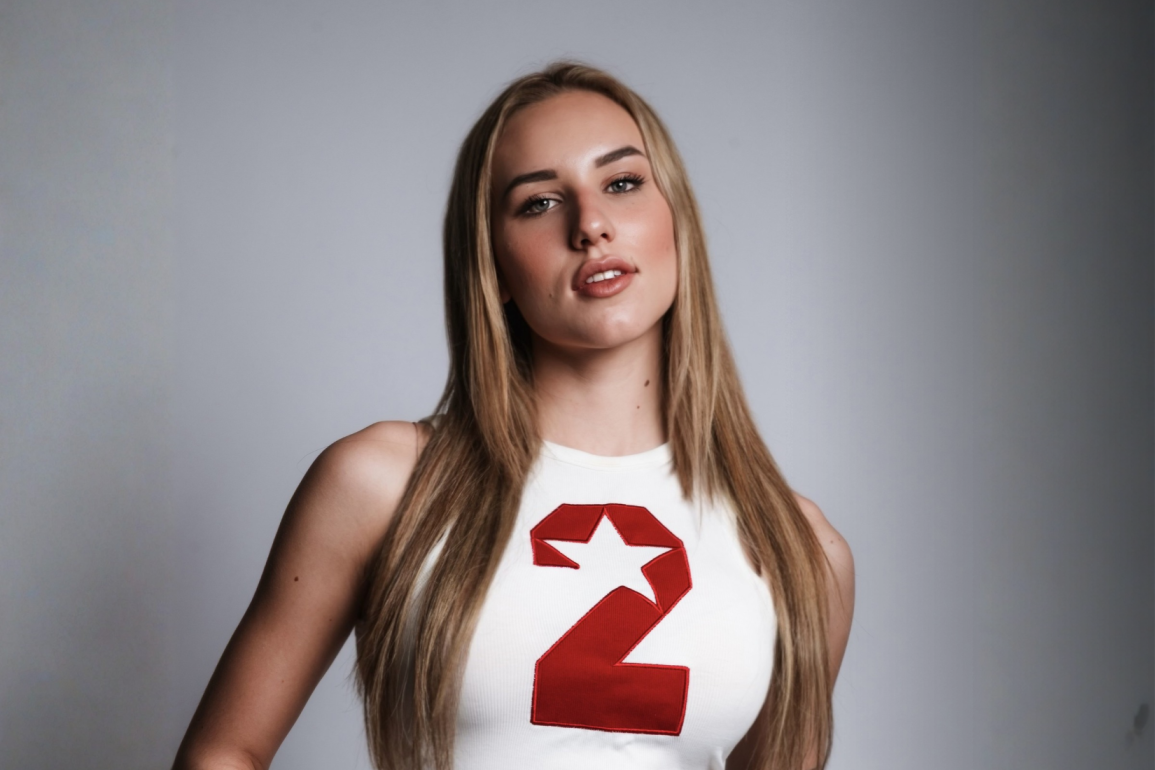
Photo Credit: Courtesy of PR
Belgian techno producer Maite Dedecker is making waves in the electronic music scene, combining driving rhythms, experimental textures and high-energy sounds. At just 20 years old, she has already performed at major events including Tomorrowland and Ostend Beach Festival, while building a growing catalogue of releases across established labels.
Following the release of her latest single, ‘Voice of the Desert’, via TRBL music, we caught up with Dedecker to discuss her musical journey, creative influences, the inspiration behind her latest release and her ambitions for the future.
Listen to ‘Voice of the Desert’ whilst reading the interview below:
Paint us a picture: what sparked your passion for the arts in the first place? Was there a single moment or experience that solidified your decision to pursue this path?
My passion for the arts started at a young age when I studied at the Royal Ballet School of Antwerp. Dance was my first way of expressing myself creatively and for a long time I imagined it would be my future. Unfortunately, I developed a serious injury: ‘scoliosis’, which forced me to stop dancing.
Although it was a difficult moment, it also opened the door to a new creative journey. Music had always been a big part of my life, but it was during this period that I truly found my passion for it. What initially felt like the end of one dream became the beginning of another.
Today, I still carry my background in dance with me. I try to incorporate elements of movement, rhythm and storytelling into my music and productions. In a way, I never really left dance behind; I simply found a different way to express it.
When you create, what leads the way – a feeling, a story, or the sound itself?
It really depends. My creative process is influenced by many different things. I draw a lot of inspiration from other productions, live performances, emotions and the stories behind them. Sometimes a particular sound or melody sparks an idea, while other times it’s a feeling or an experience that I want to translate into music.
I love how inspiration can come from unexpected places and I try to stay open to all of it. For me, creating music is about bringing these different influences together and turning them into something personal that tells a story or evokes a certain emotion.
What’s in your toolkit? Share the gear, gadgets, or software you can’t create without.
Ableton to produce, Pioneer set to mix.
What’s your go-to ritual or trick for getting into the creative zone?
I don’t really have a specific ritual or routine to get into the creative zone. Most of the time, an idea just comes to me, and from there I head into the studio to develop it further. It’s a very spontaneous process, which also means that when and how often I spend time in the studio can vary quite a bit. I prefer to let inspiration come naturally rather than force creativity.
What’s the one item you always keep within arm’s reach while creating or performing?
Definitely my phone. Not necessarily for scrolling, but because I’m constantly saving little ideas, sounds or melodies that inspire me. Inspiration can come at the most unexpected moments, so I like having something close by to capture those ideas before they disappear.
How did you ultimately end up defining your sound?
I think defining my sound is a constant journey, because music evolves just like people do. My sound keeps growing and changing as I discover new influences and develop as an artist.
Trance has always been a big influence on me, especially because my dad was a trance DJ. I grew up surrounded by that music and I think you can still hear that influence in my productions today. Over time, I’ve blended those trance influences with groovy elements, touches of psytrance, and of course techno.
I would describe my sound as a mix of techno and trance, with a strong groove, lots of energy and a very feminine touch. I love combining powerful, driving sounds with something more playful and melodic. For me, it’s all about finding that balance while continuing to evolve.
How has your creative process or perspective shifted since you started your journey?
My creative process has definitely evolved a lot since I first started. In the beginning, I was experimenting with different genres like house, afro house, and especially melodic techno. I think that phase was really important because it allowed me to discover what I liked and what felt natural to me.
Over time, I realised that I was more drawn to harder, more energetic sounds, especially techno. That’s where I really started to feel at home musically. But I haven’t completely left those earlier influences behind. I still love incorporating elements from afro house, like rhythmic percussion and timbales, into my productions.
I think that combination of different influences is what makes my sound personal. It’s become harder and more driving, but I still want to keep that groove and playful energy that I’ve always loved.
Walk us through a recording session: what’s the most memorable moment you’ve had in the studio?
I think the most memorable moments in the studio are often the unexpected ones. Sometimes I go in with a completely different idea, and after hours of experimenting, I end up creating something I never planned.
I remember working on a track that just wasn’t coming together the way I wanted. I kept changing little things and at some point I decided to completely switch up the direction, making it harder and adding more groove. Suddenly, everything clicked and I got that feeling of excitement where you just want to keep going.
Those are my favourite moments in the studio, when you lose track of time and everything starts to fall into place. It’s moments like that that remind me why I love producing music so much.
What are your opinions on generative AI music tools such as Suno? Is it something that aids in the creative process, or take away from it?
I think generative AI tools like Suno can be interesting when used in the right way. They can definitely be a source of inspiration, helping you discover new sounds, ideas or directions you might not have thought of yourself.
However, I believe there’s a big difference between using AI as a creative tool and simply copying what it generates. For me, music is about expressing your own personality, emotions, and creativity. AI can support that process, but it shouldn’t replace the artist behind it. At the end of the day, I think it’s important to keep your own identity and personal touch in your music.
Any side projects you’re working on?


I’m working on a collaboration with Bermio.
Who’s an emerging artist you think deserves more recognition right now?
Portex
What’s the strangest or most surprising song currently on your playlist?
Unicorn Blood van Demons, because the title is a bit weird but I love it.
Which song, album or playlist do you never get sick of no matter how many times you listen to it?
My remix of Deliverance, from K90
Are there any unexpected hobbies or projects you’re exploring outside of your main work?
I still like to dance and I go regularly to the gym / pilates
If your life and career were an album, what would its title be, and what’s the hidden track only your fans would know?
Give us a glimpse into the future – what surprises or milestones are coming up for you this year?
There are definitely some exciting things coming up! I have several international bookings lined up and already have a really exciting summer ahead, which I’m looking forward to. It’s always special to bring my sound to new places and connect with different crowds.
On the music side, I’m super excited about my upcoming remix of “Acid Dream” by Cherry Moon Trax, a collaboration with Bermio, and several other releases that are in the pipeline.
Famous last words?
Always follow your own path and chase your dreams. Your journey is yours and it doesn’t have to look like anyone else’s. Trust the process, stay true to yourself, and remember that what’s meant for you will always find its way to you.
Follow Maite Dedecker:
Instagram – Facebook – SoundCloud – TikTok – YouTube – Spotify